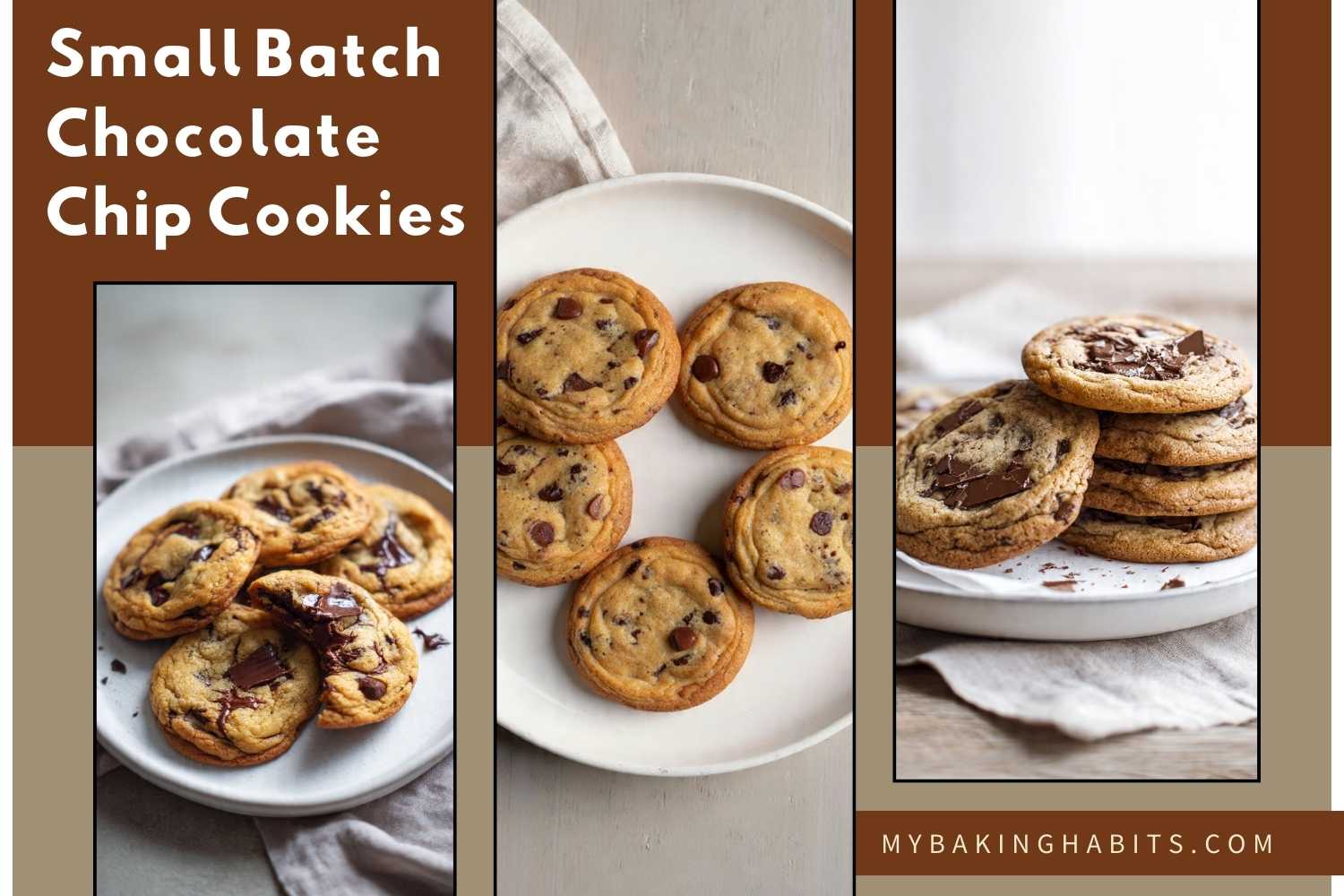
Small Batch Chocolate Chip Cookies
I make these small batch chocolate chip cookies when it’s late, the kitchen is quiet, and I want something warm from the oven without committing to a full batch that will sit on the counter for days. This recipe makes 6 to 8 cookies in under 20 minutes — one bowl, one spoon, no mixer, no chilling required.
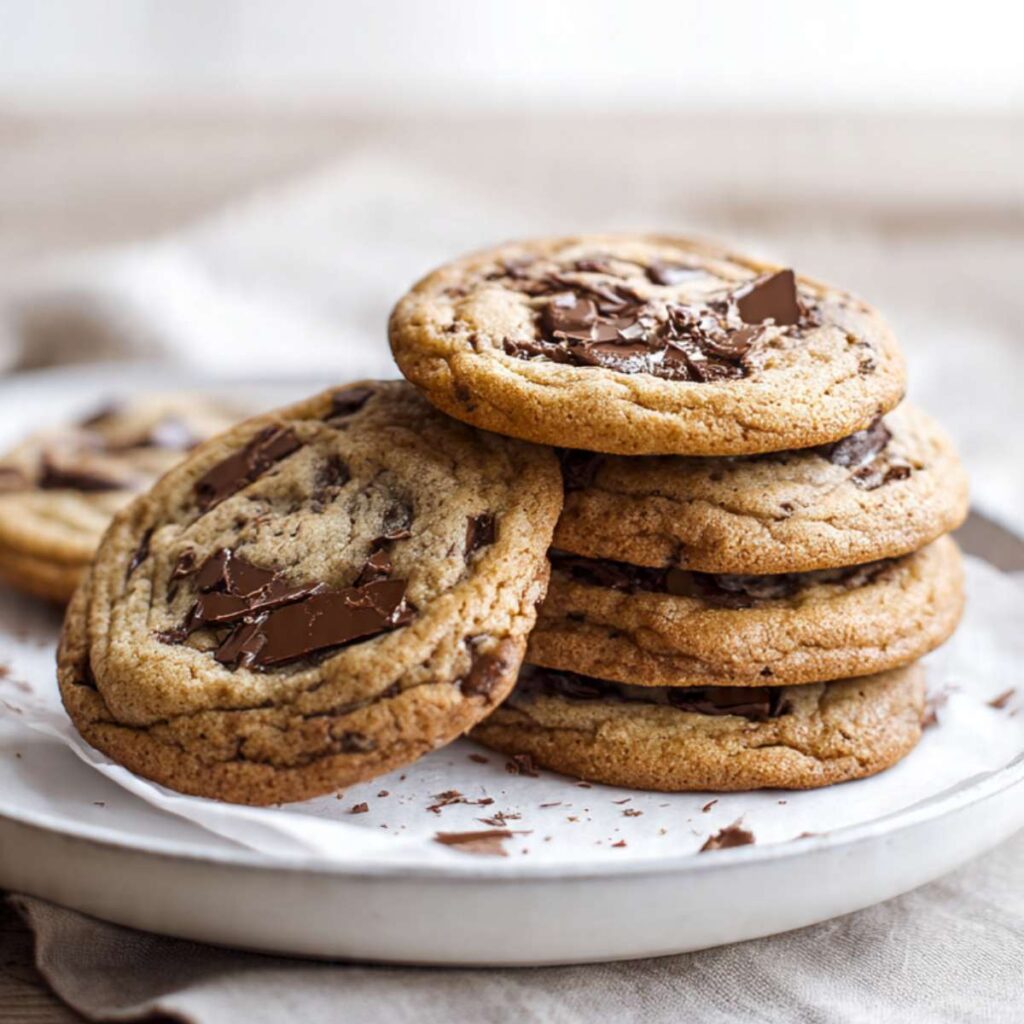
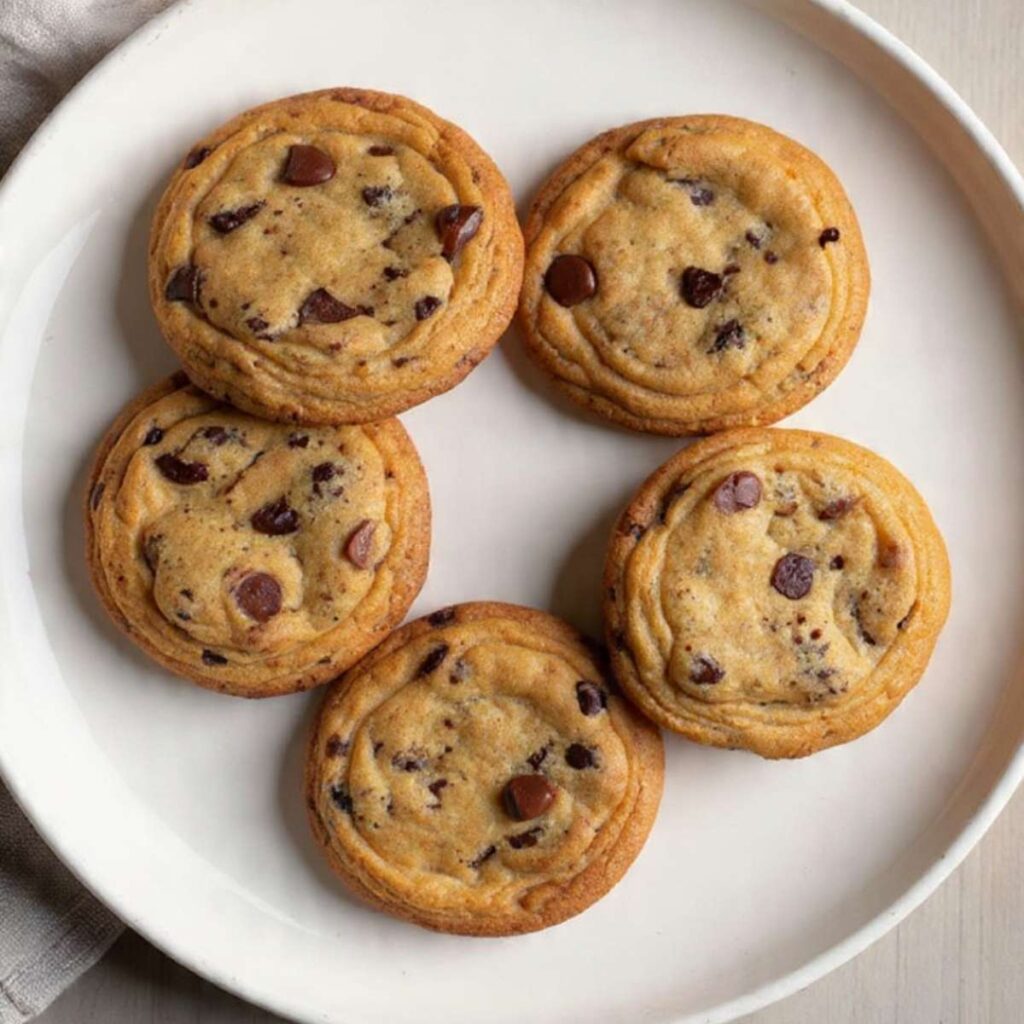
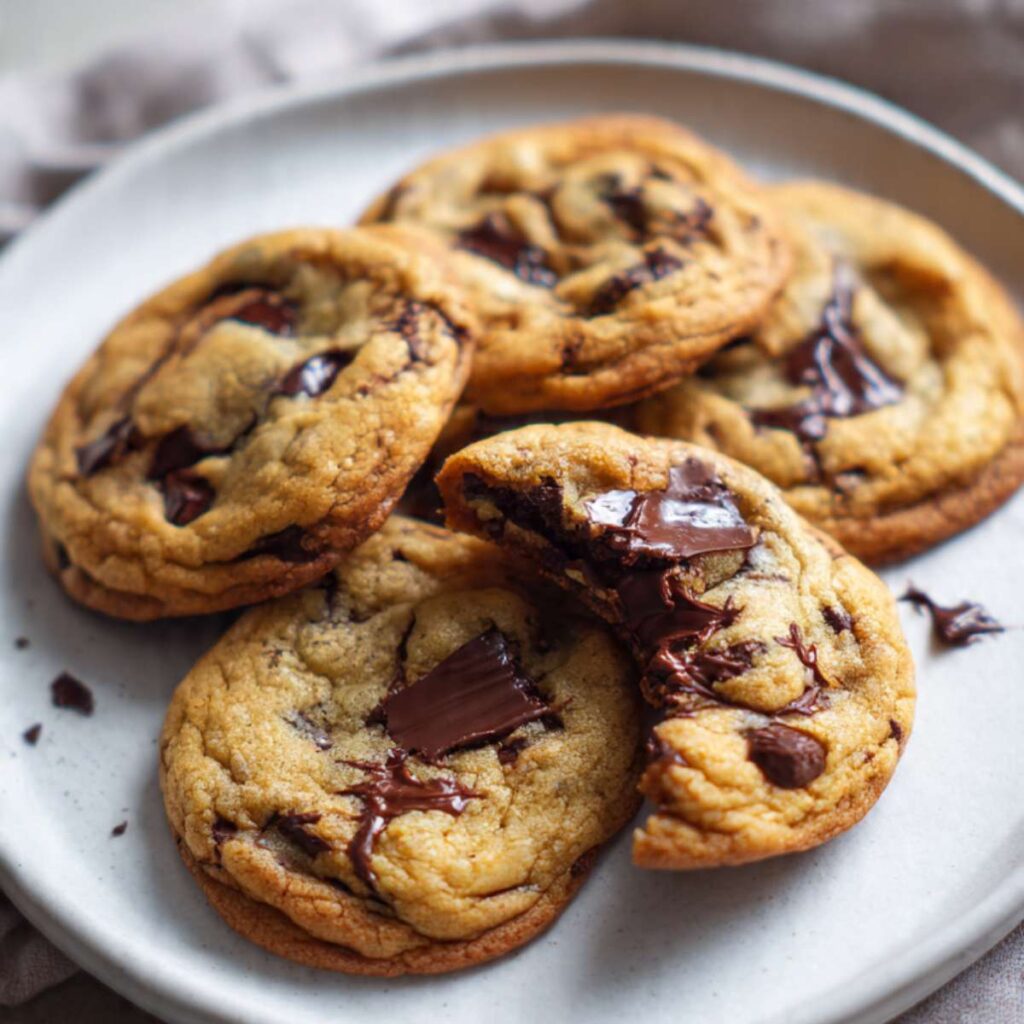
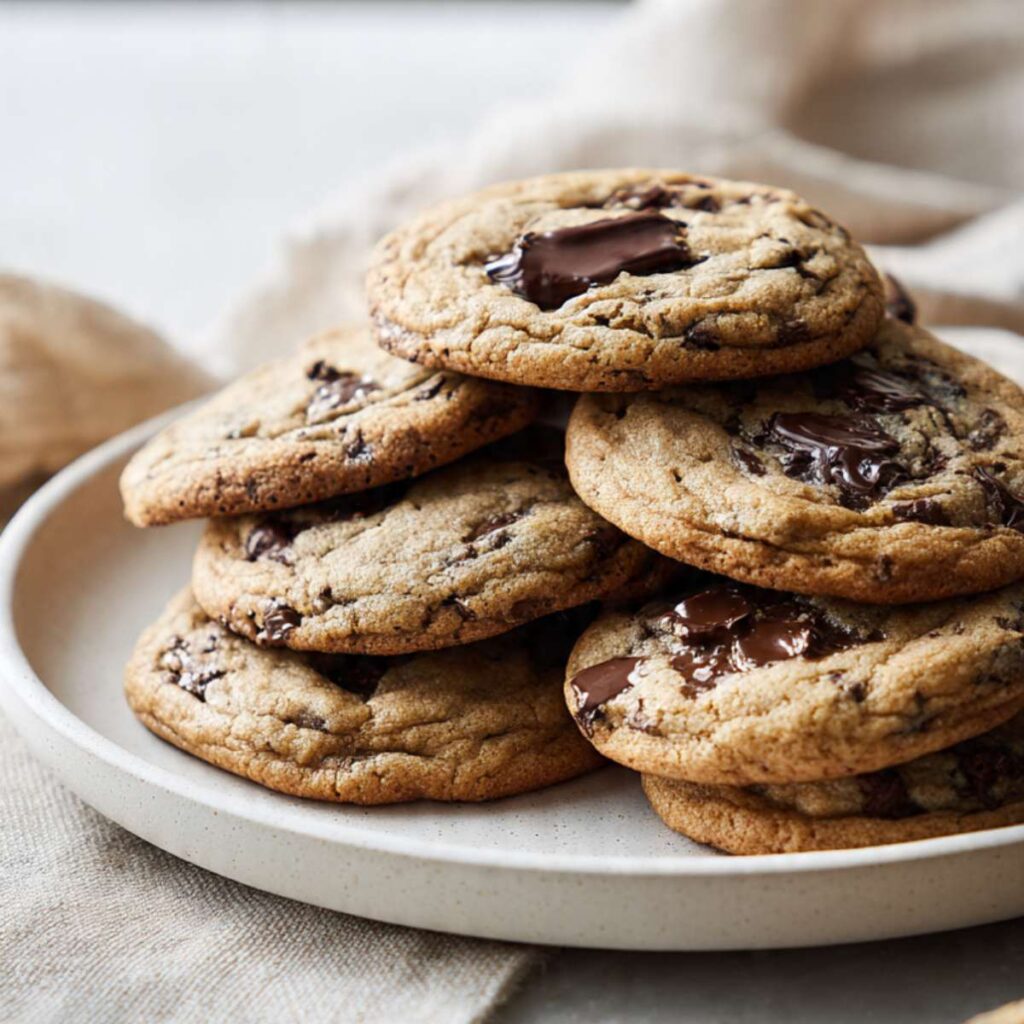
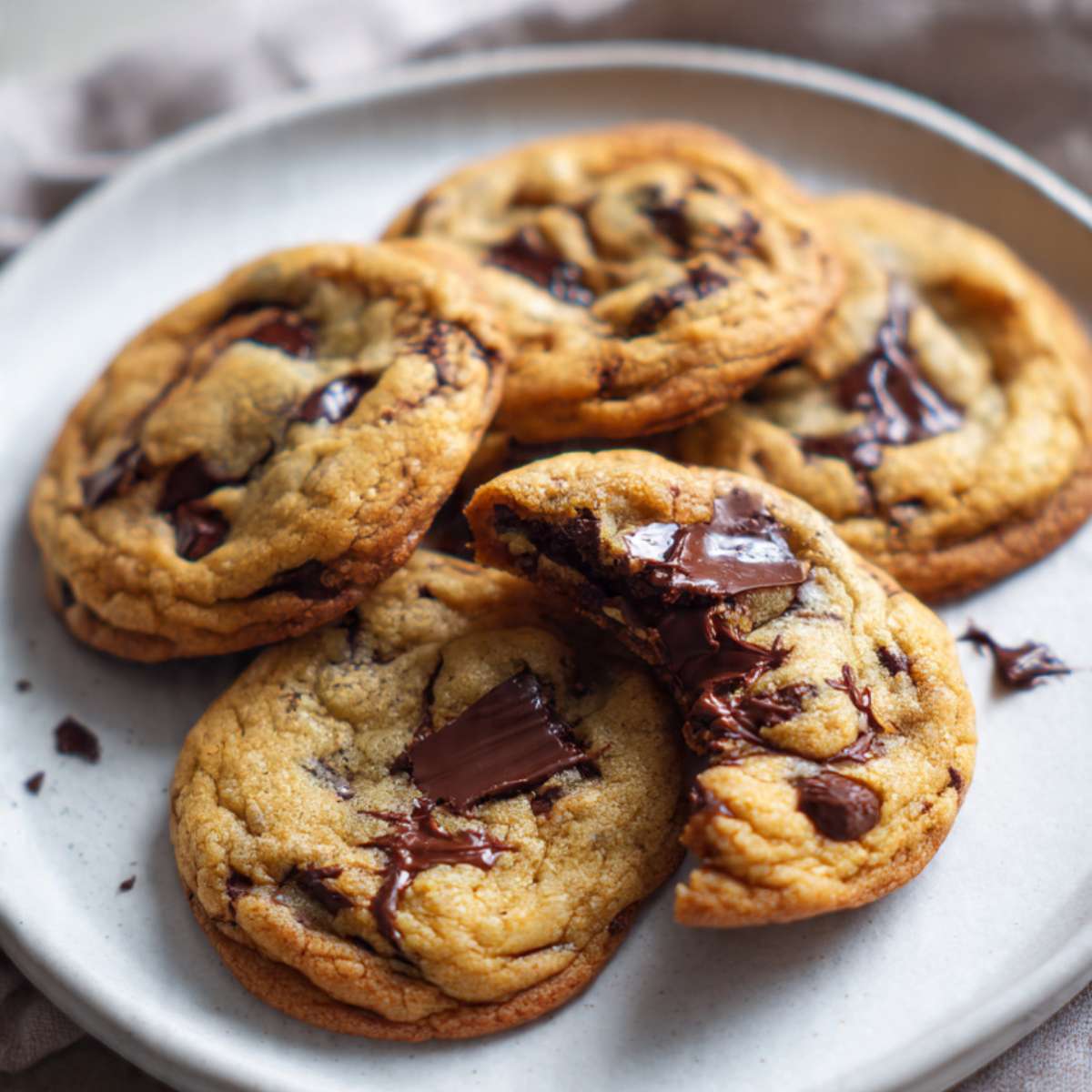
The cookies come out exactly like you see in the photos. The edges are set and lightly golden with that faint ringed crackle that only happens when the butter ratio is right. The centers stay dense and fudgy — not cakey, not dry. And the dark chocolate chunks pressed on top melt open during the bake, pooling across the surface in that glossy, irregular way that makes these look like they came out of a bakery case.
No chilling required. No mixer needed. The entire dough comes together in one bowl with a spoon in about 5 minutes.
🗒 Luna’s Note: I reach for this recipe specifically on nights when I want one good cookie — not a project, not a cleanup, not a decision about what to do with leftovers. The batch is small on purpose.
I tested this recipe with a whole egg versus just the yolk. The whole egg added too much water to a dough this small. The cookie puffed up and turned cakey, with an open, dry crumb instead of the dense fudgy center you can see in the broken-open photo. Switching to just the yolk removed that extra moisture and brought the texture back to exactly what I wanted — rich, tight, and chewy through the center. That is the version I kept.
I also tested butter temperature carefully across multiple batches. When I mixed in butter that was still hot from the microwave, the dough turned greasy before it even hit the oven and the cookies spread flat and thin with no structure. The fix was letting the melted butter sit for 5 full minutes before mixing — it should feel warm to the touch but not hot. That single habit change produced the thick, domed result visible in every photo here.
| Prep Time | Cook Time | Total Time | Yield | Difficulty |
|---|---|---|---|---|
| 10 minutes | 9 minutes | 19 minutes | 6–8 cookies | Easy |
| Calories | Fat | Carbs | Sugar | Protein |
|---|---|---|---|---|
| ~170 kcal | ~10.2g | ~18.5g | ~11.1g | ~1.8g |
Macros are approximate and will vary based on ingredient brands, cookie size, and how much chocolate is pressed on top.
Ingredients & Tools
For the Cookies
- 4 tablespoons (57g) unsalted butter, melted and cooled to warm — not hot. See Before You Start.
- 3 tablespoons (36g) packed brown sugar — measure by pressing firmly into the spoon until level
- 1 tablespoon (12g) plain white granulated cane sugar — do not substitute coconut sugar, raw sugar, or any liquid sweetener
- 1 large egg yolk (approximately 17g) — from a large egg, room temperature
- ½ teaspoon (2ml) pure vanilla extract — not imitation
- ⅓ cup + 1 tablespoon (58g) all-purpose flour, spooned and leveled — or weighed at 58g on a kitchen scale
- Pinch (approximately 0.5g) fine sea salt
- ⅛ teaspoon (0.6g) baking soda, checked for freshness
- 3 tablespoons (42g) semi-sweet chocolate chips (45–55% cacao), such as Nestlé Toll House or Ghirardelli — folded into the dough
- 1½ tablespoons (20g) dark chocolate (60–70% cacao), roughly chopped into ½-inch (1.3cm) chunks — pressed on top before baking. This is what creates the glossy pooled chocolate visible in the photos.
Before You Start
Mixing method: This entire recipe comes together in one small mixing bowl with a spoon or silicone spatula — no electric mixer of any kind needed. Do not use a mixer — it will overwork the dough.
No chilling required: This dough goes straight from the bowl to the oven. No resting time needed.
Butter temperature — the single most important prep step: Melt the butter and set it aside for exactly 5 minutes before mixing. The butter should feel warm to the touch — not hot. Press your finger to the surface of the bowl. If it feels uncomfortable to hold, it is too hot. Give it another 2 minutes. Butter that is still hot when mixed produces greasy dough that spreads flat and thin in the oven — not the thick, domed cookies in the photos.
Egg yolk temperature: The egg yolk should be at room temperature before mixing. Pull the egg from the fridge at least 30 minutes before you begin, or place the whole uncracked egg in a bowl of warm (not hot) water for 10 minutes. A cold egg yolk does not emulsify smoothly into the butter mixture and can make the batter look broken or grainy.
Flour measuring: Spoon the flour into your measuring cup using a separate spoon and level it off with a straight edge. Do not scoop the measuring cup directly into the flour bag — scooping packs in 20–30% more flour than this recipe needs and will produce a dry, crumbly cookie instead of the soft, fudgy result in the photos. For guaranteed accuracy, weigh the flour at exactly 58g on a kitchen scale. Gram weight takes priority over volume in this recipe.
Gram weight priority: For the most consistent results, use a kitchen scale set to grams. The gram weights here are what I tested with — they are the most reliable way to match my result. Volume measurements like tablespoons and cups can vary by 20–30% depending on how they are scooped or packed.
Oven rack position: Position your oven rack in the middle of the oven before preheating. Top rack burns the tops of the cookies. Bottom rack burns the bottoms.
Leavening freshness check: Before mixing, test the baking soda. Drop ½ teaspoon (3g) into a small bowl with a splash of hot water and a dash of white vinegar. It should bubble aggressively within 2 seconds. If it fizzes weakly or not at all, replace the box — expired baking soda produces flat cookies with no crackle.
Ingredient freshness checks:
- Brown sugar hardened in the bag? Place a damp paper towel over the sugar and microwave in 20-second increments until pliable before measuring.
- Chocolate chips showing a white dusty coating? That is bloom — the chocolate is still safe to use but may not melt as smoothly. Use fresh chips if you have them.
Chocolate chunk prep: Chop the dark chocolate bar into rough ½-inch (1.3cm) pieces just before baking. These go on top of the dough balls — not into the dough. The irregular shape is intentional. Uneven chunks melt at different rates and create the glossy, pooled surface visible in the photos. Pre-packaged chunks work too, but chopped bar chocolate melts more evenly.
Pan prep: Line a light-colored aluminum baking sheet with parchment paper. Do not grease the parchment — cookies on greased surfaces spread more than on dry parchment. Do not use foil — foil conducts heat more aggressively and produces overbrown bottoms. Dark non-stick pans absorb more heat and will overbrown the cookie bases before the centers are set. Light-colored aluminum is the correct pan for this recipe.
Necessary Tools
Required:
- Kitchen scale (strongly recommended — gram weights are more accurate than volume for a batch this small)
- Small mixing bowl (approximately 1-quart / 1-liter capacity)
- Silicone spatula or sturdy spoon
- Measuring spoons
- Measuring cups (if not using a scale)
- Light-colored aluminum baking sheet
- Parchment paper
- Wire cooling rack
Optional but useful:
- Oven thermometer (recommended — most home ovens run 15–25°F / 8–14°C off their displayed temperature)
- Small cookie scoop (1.5 tablespoon / 22ml capacity — ensures consistent sizing and even bake time)
- Sharp chef’s knife and cutting board (for chopping the chocolate chunks)
How to Make Small Batch Chocolate Chip Cookies
This recipe uses the one-bowl method — wet ingredients are combined first, dry ingredients are folded in gently, and mix-ins go in last. No mixer at any stage. Following this order matters: adding the dry ingredients before the wet are fully combined produces uneven mixing and inconsistent texture.
Step 1: Setting Up the Oven and Pan for an Even Bake
In your oven, position the rack in the middle slot before turning on the heat. Set the oven to 350°F (175°C) and allow it to preheat fully — at least 10 to 15 minutes. Do not rush this step.
A fully preheated oven is what produces the ringed crackle visible on the edges of the cookies in the photos. If the pan goes into an oven that has not reached full temperature, the butter melts and spreads before the edges have a chance to set — producing thin, flat cookies instead of the thick domed ones shown.
If you have an oven thermometer, place it on the middle rack now and confirm the actual temperature before the pan goes in. Most home ovens run 15–25°F (8–14°C) cooler or hotter than their display shows. Baking at the wrong temperature is the most common cause of unexpected results even when the recipe is followed correctly.
While the oven preheats, line your light-colored aluminum baking sheet with parchment paper. Leave the paper flat — no grease, no spray, no foil substitution.
The oven should be fully preheated and the pan lined before you mix a single ingredient. The dough comes together in under 5 minutes and needs to go straight onto the pan and into the oven.
Baker’s Warning: Do not put the pan in before the oven reaches full temperature — an underheated oven produces flat, greasy cookies that never develop the crackled edge visible in the photos.
Your setup is complete when the oven is at 350°F (175°C), the rack is in the middle, and the parchment-lined pan is sitting on the counter ready to receive the dough.
Step 2: Combining the Butter and Both Sugars for a Thick, Glossy Base
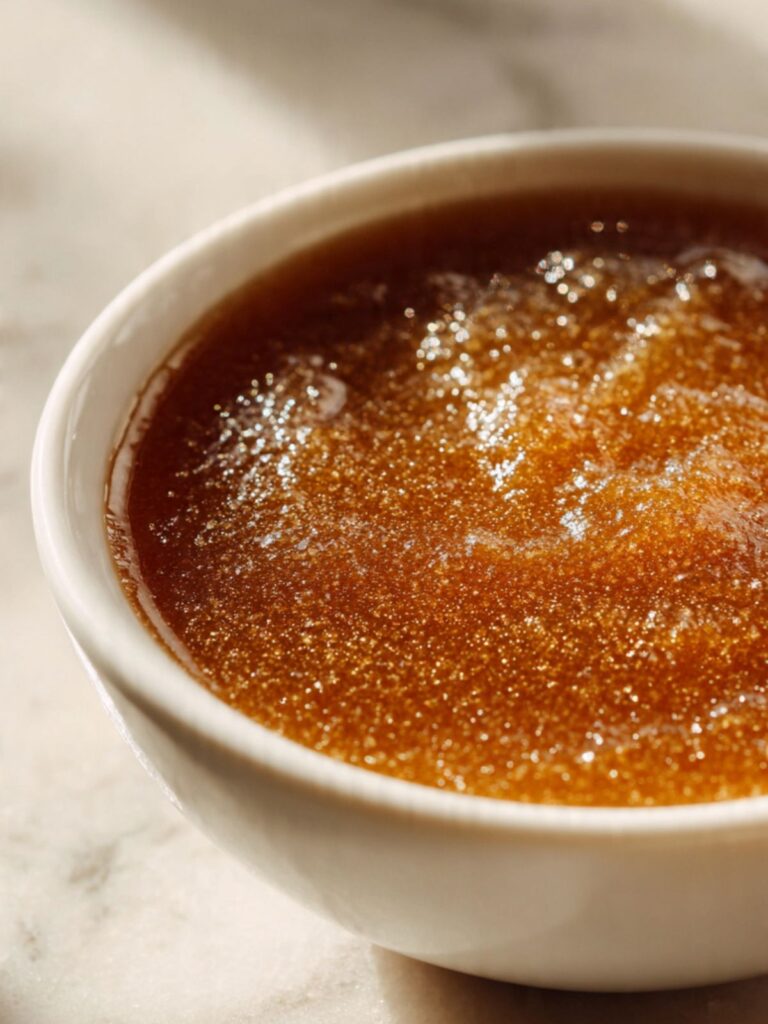
In your small mixing bowl, add your 4 tablespoons (57g) melted, cooled unsalted butter, your 3 tablespoons (36g) packed brown sugar, and your 1 tablespoon (12g) plain white granulated cane sugar.
Using your silicone spatula or spoon, stir from the bottom of the bowl upward in wide circular strokes — approximately 30 to 40 strokes — until the mixture looks thick, smooth, and glossy with no dry sugar visible at the bottom or edges of the bowl.
The brown sugar does two things here: its molasses content makes it hygroscopic — meaning it actively attracts and holds onto moisture during and after baking — which is what keeps the centers soft and chewy even the next day. The white granulated sugar drives the spread and helps develop the lightly crackled edge visible on the finished cookies. Without both, the texture balance shifts.
Do not rush this step. The sugar needs to be fully worked into the butter before the egg yolk goes in — undissolved sugar granules at this stage produce a gritty texture in the finished cookie.
The mixture should look thick, glossy, and uniform — no visible sugar granules remaining, no pools of butter at the edges of the bowl. If it still looks grainy, stir for another 20 strokes and check again.
Baker’s Warning: If your butter was still hot when you added the sugar, this mixture will look thin, oily, and loose instead of thick and glossy. Do not proceed — the dough will spread flat and greasy in the oven. Start over with cooled butter.
Step 3: Adding the Egg Yolk and Vanilla for a Rich, Emulsified Batter
Add your 1 large egg yolk (approximately 17g) and ½ teaspoon (2ml) pure vanilla extract directly to the bowl.
Stir with the same circular strokes — approximately 20 to 25 strokes — until the batter turns creamy, slightly lighter in color, and fully uniform with no visible streaks of yolk remaining.
The egg yolk is the emulsifier in this recipe. It contains lecithin — a natural compound that bonds fat and water together into a smooth, cohesive batter. This is what gives the finished cookie its dense, fudgy crumb structure rather than a dry, crumbly one. A whole egg would add too much water from the egg white — in a batch this small, that extra liquid produces steam in the oven, pushes the cookie upward, and creates a cakey texture instead of the soft, tight center visible in the broken-open cookie photo.
The batter should look smooth, creamy, and slightly thickened — like a loose caramel sauce in color and consistency. No yellow streaks of yolk should be visible. If you see streaks, stir for another 10 strokes.
Baker’s Warning: Do not overwork this stage. Stir only until the yolk disappears — aggressive mixing here begins to aerate the batter and changes the final texture away from dense and fudgy toward light and cakey.
Step 4: Adding the Dry Ingredients Without Developing Gluten
Add your ⅓ cup + 1 tablespoon (58g) all-purpose flour, spooned and leveled, your pinch (approximately 0.5g) fine sea salt, and your ⅛ teaspoon (0.6g) baking soda, checked for freshness directly on top of the wet mixture in the bowl.
Using your spatula, fold the dry ingredients in with slow, deliberate strokes from the bottom of the bowl upward — not stirring in aggressive circles. Count your strokes. Stop folding the moment no dry flour is visible — approximately 15 to 20 strokes for a batch this size.
The baking soda reacts with the natural acidity in the brown sugar to produce small CO2 bubbles during baking — these create the slight lift that keeps the centers from compressing into a dense, flat disc. The salt suppresses bitterness in the chocolate and sharpens every other flavor in the cookie. Both ingredients are small in quantity but neither is optional.
The flour provides structure — but only the right amount. At 58g for this batch size, it produces a soft, scoopable dough that holds its shape while still spreading gently in the oven. Any more flour and the cookies turn dry and crumbly. Any less and they spread too thin.
The dough should look thick, slightly rough on the surface, and hold its shape when pushed with the spatula — not wet and shiny, not crumbly and dry. A small amount of stickiness is correct.
Baker’s Warning: Stop folding the moment the flour disappears — overmixing after the dry ingredients go in develops gluten, which tightens the crumb structure and produces a tough, dense cookie instead of the tender, fudgy center visible in the photos. Every extra stroke past the point of no dry flour visible is working against you.
Step 5: Folding in the Chocolate Chips for Even Distribution
Add your 3 tablespoons (42g) semi-sweet chocolate chips (45–55% cacao) to the bowl.
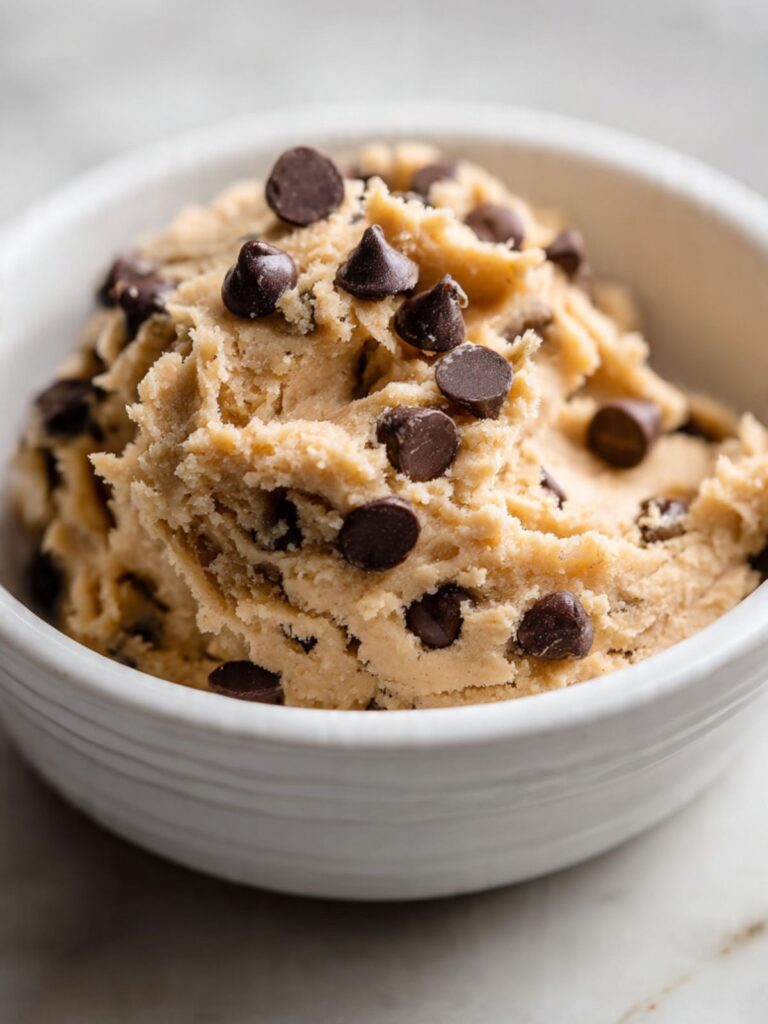
Fold them in with 8 to 10 slow strokes — just enough to distribute them evenly through the dough. These chips stay mostly intact inside the cookie as it bakes — they provide pockets of melted chocolate in every bite but do not produce the glossy pooled surface you see in the photos. That visual effect comes from the chunks pressed on top in the next step.
Do not add the dark chocolate chunks into the dough at this stage. They go on top only — their job is visual and textural, not structural.
The dough should now look thick and uniformly studded with chips — cohesive enough to hold a mound shape when scooped, slightly tacky but not sticky. This is the correct consistency.
Baker’s Warning: Do not overfold at this stage — the chips are fragile and excessive mixing breaks them apart and smears chocolate through the dough unevenly, which changes both the texture and the appearance of the finished cookie.
Step 6: Portioning the Dough and Pressing on the Chocolate Chunks
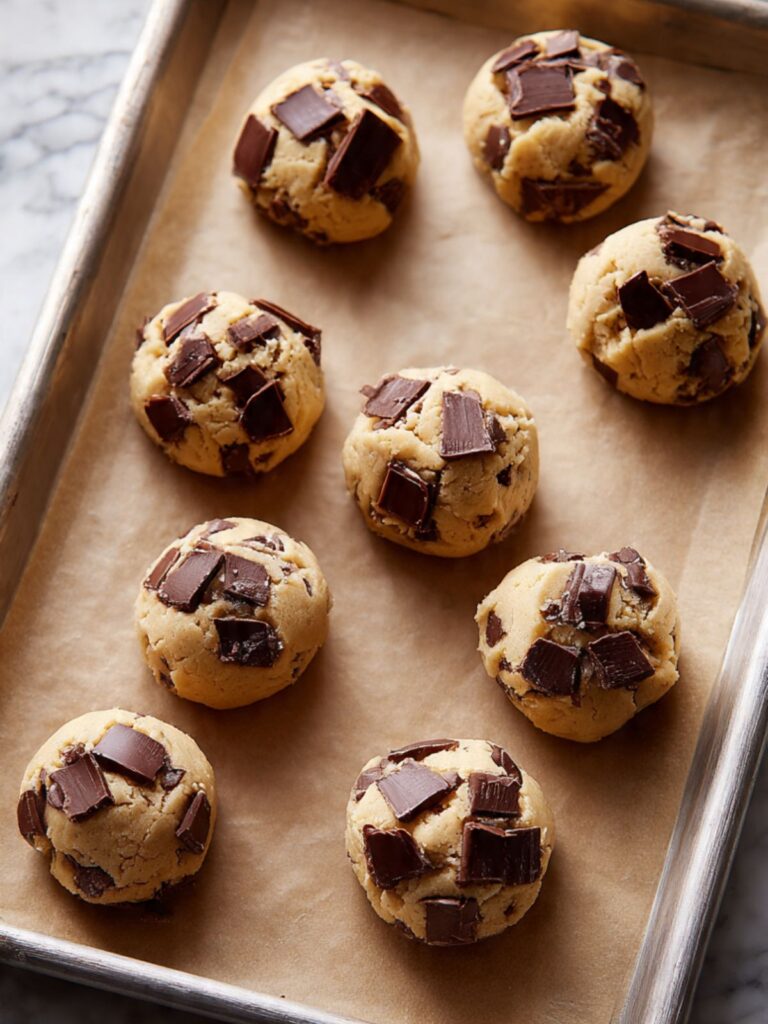
Using a spoon or 1.5-tablespoon (22ml) cookie scoop, portion the dough into balls of approximately 2 tablespoons (approximately 35g) each. Weigh the first ball on your kitchen scale — it should land between 32g and 38g. Use that weight as your reference for the remaining portions. This batch yields 6 to 8 cookies at this scoop size, depending on how level your scoops are.
Place each ball on the parchment-lined pan spaced at least 2 inches (5cm) apart. These cookies spread during baking — crowding them produces cookies that bake into each other and develop uneven edges.
Now take your 1½ tablespoons (20g) roughly chopped dark chocolate chunks (60–70% cacao) and press 3 to 5 pieces firmly into the top of each dough ball, pushing them in slightly so they grip the dough and do not slide off as the cookie spreads.
As you can see in the stacked cookie photo, the glossy, irregular pools of dark chocolate sitting across the surface of each finished cookie come entirely from these pressed-on chunks melting open during the bake. The chips folded into the dough get partially buried as the cookie spreads. The chunks on top stay visible and melt into that bakery-style finish. This step takes 30 seconds and makes the entire visual difference between a home cookie and one that looks intentional.
Do not flatten the dough balls before baking. The tall, rounded shape going into the oven is what produces the thick, domed center visible in the photos. Pressing them down before baking causes them to spread too wide and bake thin.
Each dough ball should be roughly round, approximately 1 inch (2.5cm) tall, with 3 to 5 chocolate chunk pieces sitting proud on top. The pan should have 6 to 8 balls spaced at least 2 inches (5cm) apart before it goes into the oven.
Baker’s Warning: Do not skip pressing the chunks in firmly — chunks that only rest on the surface without gripping the dough will slide off to the side as the cookie spreads during baking and will not produce the glossy pooled look shown in the photos.
Step 7: Baking Until the Edges Are Set and the Centers Look Underdone
Slide the pan onto the middle rack of your preheated 350°F (175°C) oven. Bake for 8 to 10 minutes — set a timer and start checking at the 8-minute mark.
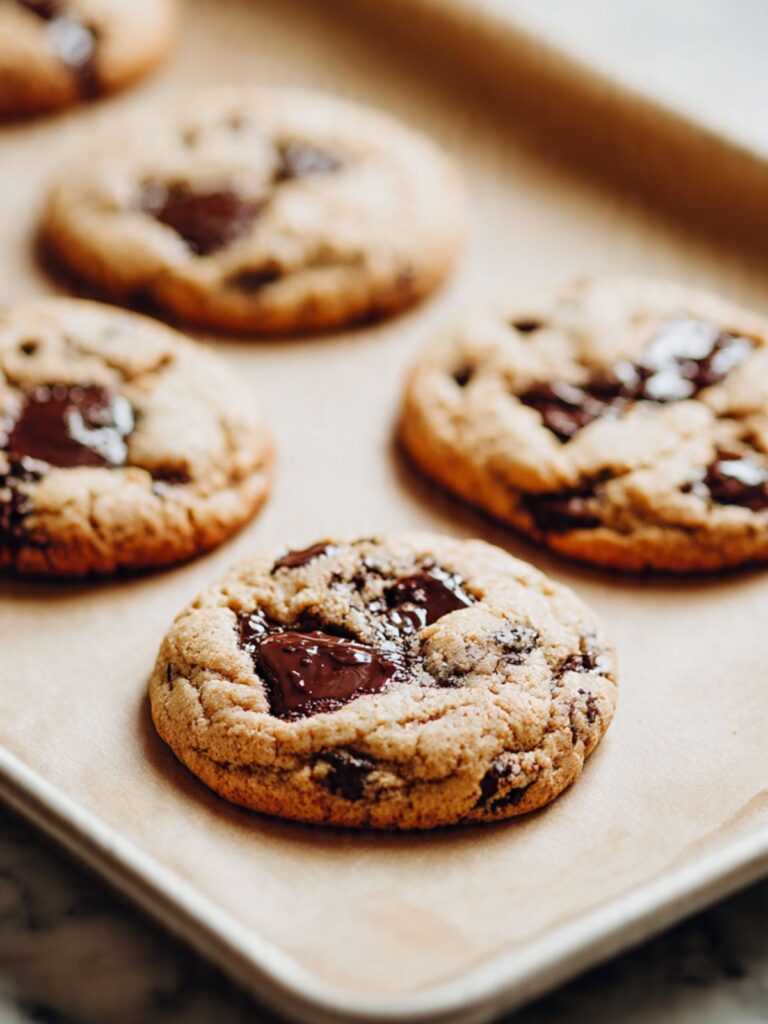
Pull the pan the moment you see lightly golden edges with a faint ringed crackle, and centers that still look pale, slightly puffy, and underdone. This is the correct moment to pull them — not when the centers look set, not when the whole cookie looks done.
Look at the pile of cookies in the photos — the edges are a defined golden color with that characteristic ring, but the centers still look soft. That is exactly what you are watching for. If the centers look fully set and dry inside the oven, the cookies are already overbaked.
The dark chocolate chunks on top should look partially melted and glossy at this point — the irregular pools of dark chocolate across the surface that you see in the close-up photos are formed in these final 2 minutes of baking as the chunks soften and spread slightly across the dough.
The edges should be set and lightly golden with a crackled ring. The centers should still look pale, soft, and slightly underdone. The chocolate chunks on top should be glossy and partially melted. This is correct — do not bake further.
Baker’s Warning: Do not wait for the centers to look done before pulling the pan — by the time the centers look set inside the oven, carryover cooking on the hot pan will overbake them. The window between perfectly fudgy and overbaked is narrow at this batch size. Pull early.
Step 8: Resting on the Pan — Carryover Cooking Finishes the Centers
Leave the cookies on the hot pan on top of a wire cooling rack for exactly 5 minutes after pulling from the oven. Do not move them, do not transfer them, do not touch them.
The pan continues to conduct heat into the base of each cookie during this resting time. This carryover cooking sets the centers quietly and gently — without the dry oven air pulling out moisture. The result is a center that is fully cooked but still soft and fudgy, not dry. The dark chocolate chunks on top will continue to melt and settle into their final glossy pool during this 5 minutes as well.
Moving the cookies before 5 minutes is up breaks the structural base — these cookies are fragile immediately out of the oven and will crack across the bottom if transferred too early. Waiting longer than 8 minutes starts to over-crisp the bottoms from the residual pan heat.
🗒 Luna’s Note: I set a timer for exactly 5 minutes the moment the pan comes out. Not because I will forget — but because every extra minute past 8 starts drying out the bottoms, and these cookies are too good to lose to impatience.
After 5 minutes, transfer the cookies to the wire rack to finish cooling. At this point the edges will be firm and the centers will still give slightly when pressed. That is the texture you want.
After the 5-minute rest, the edges should feel firm and set. The centers should still give very slightly when pressed with a fingertip — soft but not raw. The chocolate chunks on top should be fully melted and glossy. These cookies are ready to eat warm.
Baker’s Warning: Do not move the cookies before 5 minutes — the base is still setting during this time and early transfer causes the bottom to crack and the center to collapse inward.
The Science Behind Small Batch Chocolate Chip Cookies
Why Melted Butter Produces a Denser, Fudgier Cookie Than Creamed Butter
Melted butter is the reason these cookies are dense and fudgy instead of light and cakey — and understanding why helps you protect the result every time you make them.
When butter is creamed with sugar using a mixer, the paddle action traps thousands of tiny air bubbles inside the fat. Those air bubbles expand when heated in the oven and push the cookie upward, creating a more open, cakey crumb structure. Melted butter has no trapped air. It goes into the dough as a liquid, coats the flour proteins immediately, and limits how much gluten can develop. Less gluten development means a more tender, tighter crumb — and that is what produces the dense, fudgy center visible in the broken-open cookie photo.
Melted butter also means the fat is already fully liquid when it enters the dough, so it distributes more evenly through the mixture without the need for any mechanical mixing. This is why the one-bowl method works — no mixer, no creaming, no aeration. The dough comes together fast because there is no structural step that requires equipment.
The trade-off is that butter temperature matters more in a melted-butter recipe than in a creamed one. If the butter is still hot when it enters the dough, it partially melts the sugar, thins the mixture before it can set in the oven, and produces flat, greasy cookies. If you want to explore what happens when you take melted butter one step further — cooking it until the milk solids brown — my [brown butter chocolate chip cookies] post covers that process in detail and shows how the Maillard reaction creates an entirely different flavor profile from the same starting ingredient.
Why Brown Sugar Is What Keeps These Cookies Soft the Next Day
Brown sugar is not in this recipe just for flavor — it is doing structural work that white sugar cannot do.
Brown sugar contains molasses, which is hygroscopic — a chemistry term that means it actively attracts and holds onto water molecules from the surrounding environment. In a baked cookie, this means the crumb continues to pull moisture from the air after baking, staying soft and pliable for longer than a cookie made with white sugar alone. This is why small batch chocolate chip cookies made with mostly brown sugar are still soft and chewy the next day, while cookies made with mostly white sugar feel dry and crumbly within hours.
White sugar does something different — it promotes spread and helps develop the crackled edge. As white sugar melts in the oven, it flows outward, pulling the cookie edges with it and creating that defined golden ring visible in the photos. Without any white sugar, the cookie would be soft throughout but too flat and undifferentiated. The 3:1 ratio of brown to white in this recipe balances both effects — a soft, moist center that holds its texture with golden, slightly crisp edges that give the cookie its shape.
This is the same principle behind why [chewy chocolate chip cookies] always use a higher brown-to-white sugar ratio than crispy ones — the sugar balance is the single biggest lever you have for controlling texture in any drop cookie recipe.
Why Pulling the Cookies Early Is the Most Important Step in the Whole Recipe
The single most common way these cookies fail is overbaking — and it happens because the visual cue most people use is wrong.
Most bakers pull cookies when the centers look set and done. For these small batch chocolate chip cookies, that moment is already too late. By the time the centers look fully cooked through the oven door, carryover cooking — the continued cooking that happens from residual heat in the pan after the pan leaves the oven — will push the internal temperature past the point of fudgy and into dry.
Here is the mechanism: when you pull a hot pan from the oven, the aluminum holds its heat and continues conducting it into the base of the cookies for 4 to 6 minutes. The cookie centers are still rising in temperature during this time even though the oven door is closed. If the centers looked done in the oven, they will be overbaked on the plate.
The correct pull moment is when the edges look set and lightly golden with a faint crackle, and the centers still look pale, slightly puffy, and underdone. That underdone appearance in the oven is the finished fudgy center on the plate. The 5-minute rest on the hot pan is not cooling time — it is the final stage of the bake, done at a gentler temperature that sets the center without drying it out.
🗒 Luna’s Note: The first time I made these correctly I was convinced I was pulling them too early. They looked raw in the middle. Five minutes later they were perfect. That moment is the whole recipe.
Small Batch Chocolate Chip Cookies Troubleshooting & Pro-Tips
Common Mistakes
You Used the Wrong Chocolate Type and the Surface Looks Like Regular Chips, Not Glossy Pools
Symptom: The cookies look fine but the surface chocolate looks like intact melted chips — no glossy irregular pools, no bakery-style finish.
Cause: Only semi-sweet chips were used throughout — both folded into the dough and pressed on top. Standard chips are formulated with stabilizers that help them hold their shape during baking. They melt, but they do not spread and pool the way chopped bar chocolate does. The glossy, pooled chocolate surface visible in the photos comes specifically from roughly chopped dark chocolate bar (60–70% cacao) pressed on top before baking — not from chips.
Immediate fix: Nothing can be done once the cookies are baked. The texture and flavor are still correct — this is purely a visual result.
Prevention: Use two types of chocolate. Fold semi-sweet chips (45–55% cacao) into the dough for interior chocolate pockets. Press roughly chopped dark chocolate bar pieces (60–70% cacao) firmly onto the top of each dough ball before the pan goes in. The chunks melt open during the bake and create the glossy, irregular surface visible in every photo here.
You Used a Dark Pan and the Cookie Bottoms Are Overbrown
Symptom: The edges and centers look correct but the bottoms are darker than expected — almost burnt — while the tops still look underdone.
Cause: A dark non-stick baking sheet was used instead of a light-colored aluminum one. Dark pans absorb significantly more radiant heat from the oven element and transfer that heat directly into the cookie base. At 350°F (175°C) over 8 to 10 minutes, a dark pan can overbrown the bottom of a thin cookie before the center is fully set.
Immediate fix: If the bottoms are only lightly overbrown, the cookies are still edible — the top and center texture should be unaffected. If they are burnt, this batch cannot be saved.
Prevention: Use a light-colored aluminum baking sheet lined with parchment paper for every batch of these cookies. If you only have dark pans, reduce the oven temperature by 25°F (15°C) to 325°F (163°C) and increase bake time by 1 to 2 minutes to compensate. Keep a close eye on the bottoms.
Your Cookies Spread Too Flat and Thin
Symptom: The cookies spread wide and flat in the oven — thin edges, no dome, no soft center. They look more like lace cookies than the thick, rounded ones in the photos.
Cause: Almost always one of three things — butter that was still hot when mixed, too little flour, or a pan that was already warm from a previous batch. Hot butter melts the sugar before the dough can set in the oven and the cookie has no structure to hold its shape. Under-measured flour gives the dough too little body. A warm pan from a previous batch starts melting the butter before the cookie even enters the oven.
Immediate fix: These cookies cannot be undone once baked. If they are still tasty, eat them — the flavor is correct even if the texture is not.
Prevention: Let melted butter cool for a full 5 minutes before mixing — it should feel warm, not hot. Use a kitchen scale to weigh flour at exactly 58g — do not scoop. Let the baking sheet return to room temperature between batches or use a second pan. If your kitchen is warm (above 75°F / 24°C), refrigerate the scooped dough balls for 10 minutes before baking.
Your Cookies Came Out Cakey and Dry Instead of Soft and Fudgy
Symptom: The cookies have an open, light crumb — they break apart easily and feel dry instead of dense and chewy. The center does not have the soft fudgy pull visible in the broken-open cookie photo.
Cause: One of three causes. First, a whole egg was used instead of just the yolk — the egg white adds too much water to a batch this small, creating steam in the oven that lifts the cookie upward and produces a cakey crumb. Second, the cookies were overbaked — left in the oven until the centers looked set, which means by the time carryover cooking finished on the hot pan they were dry throughout. Third, too much flour was added from scooping directly into the bag.
Immediate fix: Nothing restores a cakey texture once baked. If they are overbaked, store in a lidded container with a small piece of bread overnight — the moisture from the bread transfers into the cookies and softens them slightly.
Prevention: Use only the yolk — separate it carefully and discard the white or save it for another use. Pull the cookies when the centers still look underdone and pale. Weigh the flour at 58g or use the spoon-and-level method, never scooping directly from the bag.
Your Cookies Are Tough and Dense Instead of Tender
Symptom: The cookies feel tough when bitten — the crumb is tight, chewy in the wrong way, and does not have the soft, yielding center of the photos. They feel more like a hard cookie than a soft one.
Cause: Overmixing after the flour was added. Every stroke of the spoon after the dry ingredients go in develops gluten — the protein network in all-purpose flour that creates elasticity and chew. In a small batch like this, gluten develops quickly and a small amount of overmixing has a noticeable effect on the final texture.
Immediate fix: Once baked, a tough cookie cannot be reversed. Microwave one cookie for 10 seconds before eating — the brief heat softens the texture slightly and makes it more palatable.
Prevention: Count your strokes after the flour goes in. Stop folding the moment no dry flour is visible — approximately 15 to 20 strokes. Every stroke past that point is developing gluten. Use a spatula with wide, slow strokes from the bottom of the bowl upward rather than vigorous circular stirring.
Your Baking Soda Failed and the Cookies Came Out Flat With No Crackle
Symptom: The cookies baked up flat, dense, and pale with no crackled edge and no lift. They look dull on the surface and compressed rather than lightly domed.
Cause: Expired or dead baking soda. Baking soda loses its potency after 3 to 6 months once the box is opened. When it can no longer produce CO2 bubbles during baking, the cookies get no lift, no crackle, and a heavy, compressed texture.
Immediate fix: These cookies cannot be saved once baked. The flavor may still be acceptable but the texture will be noticeably off.
Prevention: Test baking soda freshness before every batch. Drop ½ teaspoon (3g) into a small bowl with a splash of hot water and a dash of white vinegar. It should bubble aggressively within 2 seconds. If it fizzes weakly or does nothing, replace the box. A fresh box of baking soda costs less than the ingredients in this recipe.
Your Results Were Different Because of High Altitude or High Humidity
High humidity (above 70% relative humidity): In humid climates, cookies spread more during baking because the dough absorbs extra moisture from the air and the butter softens faster. If your kitchen is humid, refrigerate the scooped and chunked dough balls for 10 to 15 minutes before baking to firm up the butter. Baked cookies may also feel slightly sticky on the surface even when fully baked — this is surface moisture from the air, not underbaking.
High altitude (above 3,500 feet / 1,067 meters): At high altitude, leavening gases expand faster and liquids evaporate more quickly. For this recipe, reduce the baking soda from ⅛ teaspoon to a small pinch, increase the flour by 1 teaspoon (3g), and reduce the brown sugar by ½ teaspoon (2g). Oven temperature may need to increase by 15–25°F (8–14°C) and bake time may decrease by 1 to 2 minutes. Start checking at 7 minutes.
Expert Pro-Tips
Use chopped bar chocolate on top, not chips — and press them in firmly. Press 3 to 5 pieces of roughly chopped dark chocolate bar (60–70% cacao) into each dough ball just before the pan goes into the oven, pushing them slightly into the dough so they grip. Bar chocolate contains more cocoa butter and fewer stabilizers than chips — it melts completely open during the bake and pools across the surface in an irregular, glossy spread. This is what produces the finish in the photos. Chips hold their shape. Chunks don’t. The difference is entirely in which chocolate you press on top.
Slightly over-tall dough balls bake into thicker cookies. Instead of rolling the dough into a perfect sphere, shape each portion into a cylinder that is taller than it is wide — roughly 1.2 inches (3cm) tall and 1 inch (2.5cm) across. This extra height encourages the cookie to spread outward and stay thick in the center rather than flattening evenly across the surface. The result is a more domed cookie with a deeper soft center, exactly like the stacked cookies in the photos.
A cold pan between batches prevents premature spread. If baking multiple batches back to back, let the baking sheet cool completely before scooping the next batch onto it — or use a second pan. A warm pan from the first batch starts melting the butter in the dough before the cookies even enter the oven, which causes early spread and produces a flatter, thinner result than the first batch. Running the warm pan under cold water and drying it completely takes 30 seconds and produces a consistent second batch.
🗒 Luna’s Note: I keep a second baking sheet in rotation specifically for back-to-back small batches. The first pan goes straight into the sink under cold water the moment the cookies are transferred to the rack. Second pan goes in immediately. Both batches come out identical.
How to Store Small Batch Chocolate Chip Cookies
Room Temperature
Store fully cooled cookies in a lidded hard-sided container — a small plastic storage container or a ceramic cookie jar with a fitted lid. Place a single layer of parchment paper between each layer of cookies if stacking. Do not use zip-lock bags — the soft sides compress the cookies as they are stacked and the cookies flatten and lose their domed shape within a few hours.
These cookies are at their best on day one, warm from the oven or within the first 4 hours of baking. By day two the centers are still soft but the edges begin to firm up slightly as the butter crystallizes. By day three the texture is still acceptable but noticeably drier than fresh.
Maximum room temperature storage: 2 days. Keep the container away from direct sunlight, heat sources, and any area of the kitchen that gets warm — warmth accelerates moisture loss and dries out the crumb faster.
To bring a day-old cookie back to fresh texture: microwave for 10 seconds on a microwave-safe plate. The brief heat re-melts the chocolate and softens the center back to close to just-baked. Do not microwave for longer than 15 seconds — overheating makes the cookie tough.
Refrigerator
Refrigerator storage is not recommended for these cookies. Cold air is dry air — the refrigerator pulls moisture out of the crumb faster than room temperature storage does, and the chocolate chunks on the surface dull and lose their glossy appearance within 24 hours.
If your kitchen is very warm (above 78°F / 26°C) and the cookies are at risk of going stale faster from the ambient heat, a single layer in a lidded container in the fridge is acceptable — but bring them back to room temperature for 20 to 30 minutes before eating, or microwave for 10 seconds. Cold cookies eaten straight from the fridge taste denser and less chocolatey than room temperature ones.
Freezer — Baked
Baked and fully cooled cookies freeze well for up to 6 weeks. Wrap each cookie individually in plastic wrap — one layer tight against the surface of the cookie — then place all wrapped cookies in a zip-lock freezer bag or a lidded freezer-safe container. The individual wrap prevents freezer burn on the chocolate surface and stops the cookies from sticking together.
To thaw: remove from the freezer and leave at room temperature for 20 to 30 minutes, or microwave a single unwrapped cookie for 15 to 20 seconds until the center is warm and the chocolate is soft again. The texture after thawing and microwaving is very close to fresh — the center softens and the chocolate re-melts.
Do not thaw in the refrigerator — this dries out the crumb. Room temperature thaw or microwave only.
Freezer — Unbaked
Freezing unbaked dough balls is the better option for this recipe and the one I use most often. It gives you fresh-baked cookies on demand without mixing dough from scratch.
Scoop and portion the dough, press the chocolate chunks onto each ball, then place the dough balls on a parchment-lined plate or small tray. Freeze uncovered for 1 hour until solid. Once solid, transfer to a zip-lock freezer bag and freeze for up to 3 months.
To bake from frozen: place the frozen dough balls directly onto a parchment-lined light-colored baking sheet — do not thaw first. Bake at 350°F (175°C) for 11 to 13 minutes — 2 to 3 minutes longer than the fresh dough timing. The visual cue is identical: pull when the edges are set and lightly golden and the centers still look slightly underdone. Carryover cooking on the hot pan finishes the centers exactly as it does with fresh dough.
🗒 Luna’s Note: I make a double batch of dough every few weeks and freeze all of it in balls. Tuesday night cookies in 13 minutes with no mixing, no cleanup, no decision-making. This is the version of this recipe I use most.
Serving Suggestion
I serve these warm — always. The ideal window is 8 to 12 minutes after they come out of the oven, when the centers are still just slightly soft and the dark chocolate chunks on top are glossy and yielding.
A glass of cold whole milk is the pairing I come back to every time. The fat in whole milk cuts through the richness of the chocolate and butter and makes each bite taste cleaner and less sweet. Skim milk does not work the same way — it lacks the fat needed to balance the richness.
For a quick dessert that takes 90 seconds to assemble, press a warm cookie against a small scoop of vanilla bean ice cream. The heat from the cookie starts melting the ice cream immediately and the contrast between the warm fudgy cookie and cold ice cream is the best version of this recipe.
These cookies also work well alongside a strong black coffee or an unsweetened chai. The bitterness in both cuts through the sweetness and lets the dark chocolate flavor in the chunks come through more clearly.
Frequently Asked Questions About Small Batch Chocolate Chip Cookies
Why did my small batch chocolate chip cookies spread too much?
Small batch chocolate chip cookies spread too much when the butter was still hot when mixed, the flour was under-measured, or the baking sheet was warm from a previous batch. In a small batch, even a small deviation in butter temperature has a larger effect than it would in a full recipe — there is less total dough mass to resist the spread. Melt the butter and let it cool for a full 5 minutes before mixing — it should feel warm, not hot. Weigh the flour at exactly 58g using a kitchen scale rather than measuring by volume. If baking a second batch, let the pan cool completely or use a second pan.
Can I make small batch chocolate chip cookies ahead of time?
The best make-ahead method for these cookies is to freeze the unbaked dough balls rather than baking them in advance. Scoop and portion the dough, press the chocolate chunks on top, freeze solid on a tray for 1 hour, then transfer to a freezer bag for up to 3 months. Bake directly from frozen at 350°F (175°C) for 11 to 13 minutes — no thawing needed. This gives you freshly baked cookies on demand without any mixing. If you prefer to make the dough ahead without freezing, cover the bowl and refrigerate for up to 24 hours — let the dough sit at room temperature for 10 minutes before scooping so it is pliable enough to portion evenly.
What makes cookies chewy vs. crispy?
The chewy vs. crispy result in chocolate chip cookies is controlled primarily by three variables: sugar ratio, flour amount, and bake time. More brown sugar produces a chewier, softer cookie because its molasses content is hygroscopic — it holds onto moisture after baking. More white sugar produces a crispier cookie because white sugar promotes spread and caramelization at the edges. More flour limits spread and produces a thicker, denser crumb structure. Shorter bake time pulled earlier produces a soft, fudgy center from carryover cooking on the pan. Longer bake time produces a crispier, more set result throughout. These small batch chocolate chip cookies use a 3:1 brown to white sugar ratio and an early pull specifically to land in the chewy, soft-centered range.
Can I double this small batch chocolate chip cookie recipe?
Yes, this recipe doubles reliably. Multiply every ingredient by 2 with one exception — increase the baking soda to only ¼ teaspoon total, not the full doubled amount of ⅛ + ⅛ teaspoon. Leavening does not scale linearly: doubling the baking soda produces cookies that taste slightly soapy and over-lifted. Bake the doubled batch on two separate light-colored baking sheets — one batch at a time in the middle rack position. Do not crowd both pans onto the same rack simultaneously as this blocks airflow and produces uneven browning. Bake time stays the same at 8 to 10 minutes per pan.
Does altitude or humidity affect these cookies?
Yes, both environment factors affect this recipe in specific ways. In high humidity above 70% relative humidity, the dough absorbs extra moisture from the air and the cookies spread more during baking — refrigerate the scooped dough balls for 10 to 15 minutes before baking to firm the butter back up. At high altitude above 3,500 feet (1,067 meters), leavening gases expand faster and the cookies can over-spread or over-lift — reduce the baking soda to a very small pinch, add 1 teaspoon (3g) extra flour, reduce the brown sugar by ½ teaspoon (2g), and increase the oven temperature by 15 to 25°F (8 to 14°C). Start checking the cookies at 7 minutes rather than 8.
Can I use salted butter instead of unsalted?
You can use salted butter in this recipe, but omit the pinch of fine sea salt from the dry ingredients if you do. Salted butter contains approximately ¼ teaspoon of salt per ½ cup (113g) — in a small batch using only 4 tablespoons (57g), that adds roughly ⅛ teaspoon of salt, which is close to the pinch the recipe calls for. Adding the recipe salt on top of salted butter pushes the salt level noticeably high in a batch this small and sharpens the flavor in a way that competes with the chocolate rather than supporting it. Unsalted butter is always the preferred choice because it gives you precise control over the salt level.
Can I make these gluten free?
Yes, with a 1:1 gluten-free all-purpose flour blend. Brands like Bob’s Red Mill 1-to-1 Baking Flour or King Arthur Measure for Measure work reliably as direct substitutes — use the same weight of 58g. The texture will be very slightly more crumbly than the standard version and the edges may spread a touch wider, but the fudgy center and glossy chocolate surface remain intact. Do not substitute almond flour directly — almond flour has a much higher fat content and will produce cookies that spread completely flat and feel greasy rather than chewy. If you want a dedicated gluten-free chocolate chip cookie recipe built specifically around almond flour ratios, my [gluten free chocolate chip cookies] post covers that version in full.
More Cookies You’ll Love
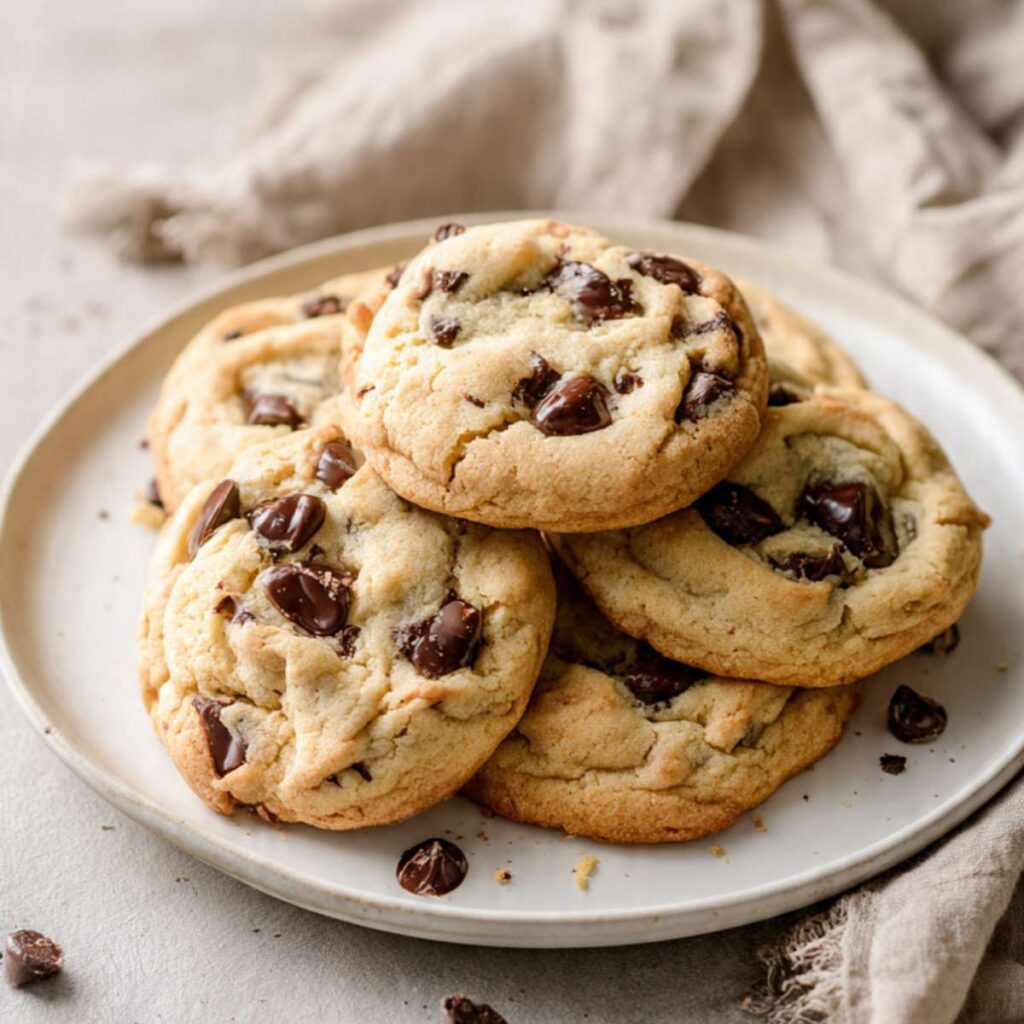
- Easy Chocolate Chip Cookies Recipe — a full-batch version of this same soft, fudgy style when you need more than 8 cookies at once.
- Chewy Chocolate Chip Cookies — maximum chew with a slightly thicker, taller profile and a deeper brown sugar flavor than the standard recipe.
- Brown Butter Chocolate Chip Cookies — the same one-bowl concept with browned butter for a nuttier, more complex flavor in every bite.

Small Batch Chocolate Chip Cookies
Ingredients
Equipment
Method
- Position the oven rack in the middle slot and preheat to 350°F (175°C) for at least 10 to 15 minutes, then line a light-colored aluminum baking sheet with parchment paper and set aside.
- In a small mixing bowl, combine the melted cooled butter, packed brown sugar, and white granulated sugar and stir with a spatula in wide circular strokes for 30 to 40 strokes until thick, smooth, and glossy with no visible sugar granules remaining.
- Add the egg yolk and pure vanilla extract and stir for 20 to 25 strokes until the batter is creamy, slightly lighter in color, and fully uniform with no streaks of yolk visible.
- Add the flour, fine sea salt, and baking soda on top of the wet mixture and fold in with slow strokes from the bottom of the bowl upward — approximately 15 to 20 strokes — stopping the moment no dry flour is visible.
- Add the semi-sweet chocolate chips and fold in with 8 to 10 slow strokes until evenly distributed through the dough.
- Scoop the dough into 6 to 8 balls of approximately 2 tablespoons (35g) each and place at least 2 inches (5cm) apart on the prepared pan, then press 3 to 5 pieces of chopped dark chocolate firmly into the top of each ball.
- Bake at 350°F (175°C) for 8 to 10 minutes until the edges are set and lightly golden with a faint crackle and the centers still look pale, soft, and slightly underdone — do not wait for the centers to look set.
- Leave the cookies on the hot pan on a wire rack for exactly 5 minutes — do not move them — then transfer to the rack to finish cooling.