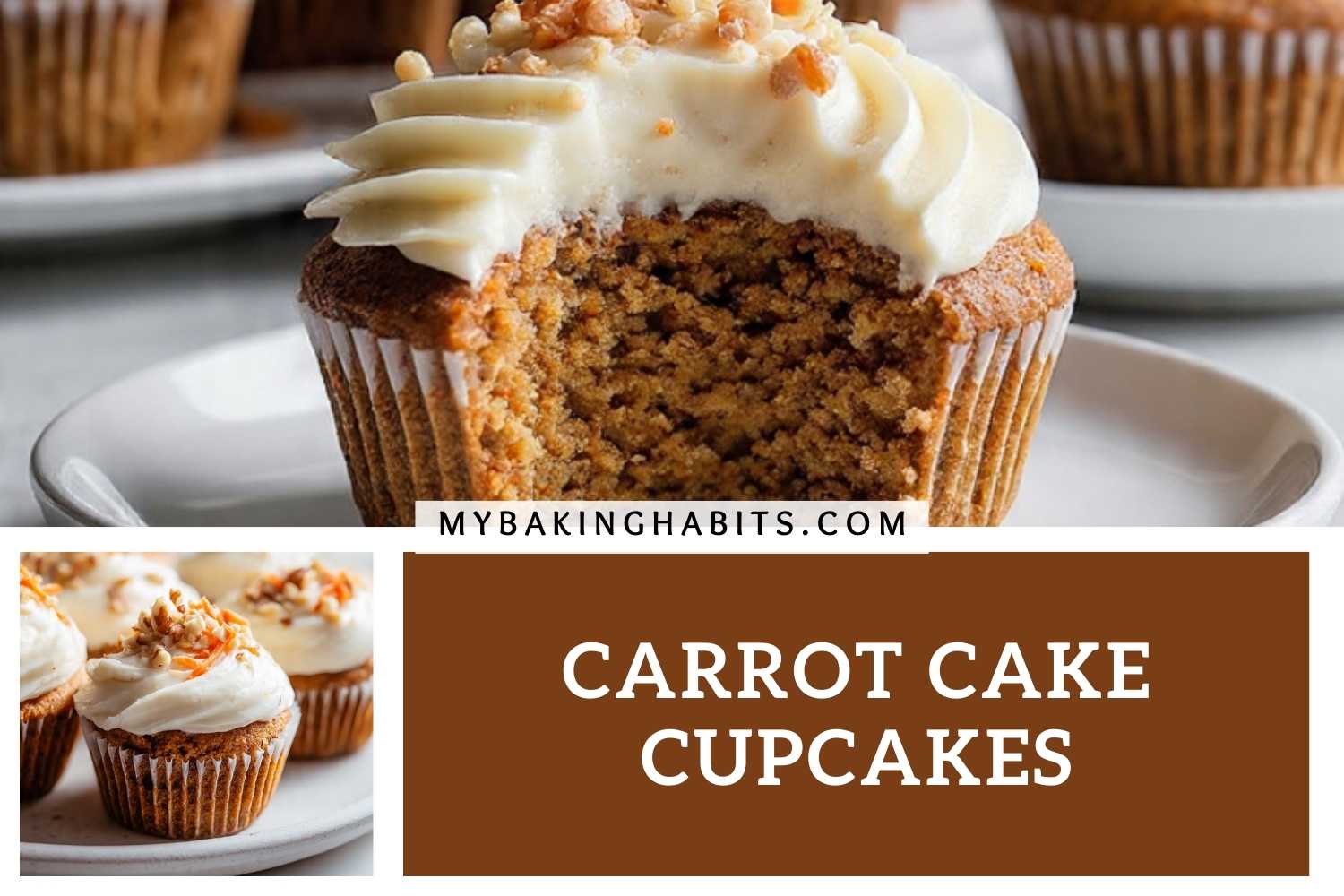
Moist Carrot Cake Cupcakes with Cream Cheese Frosting
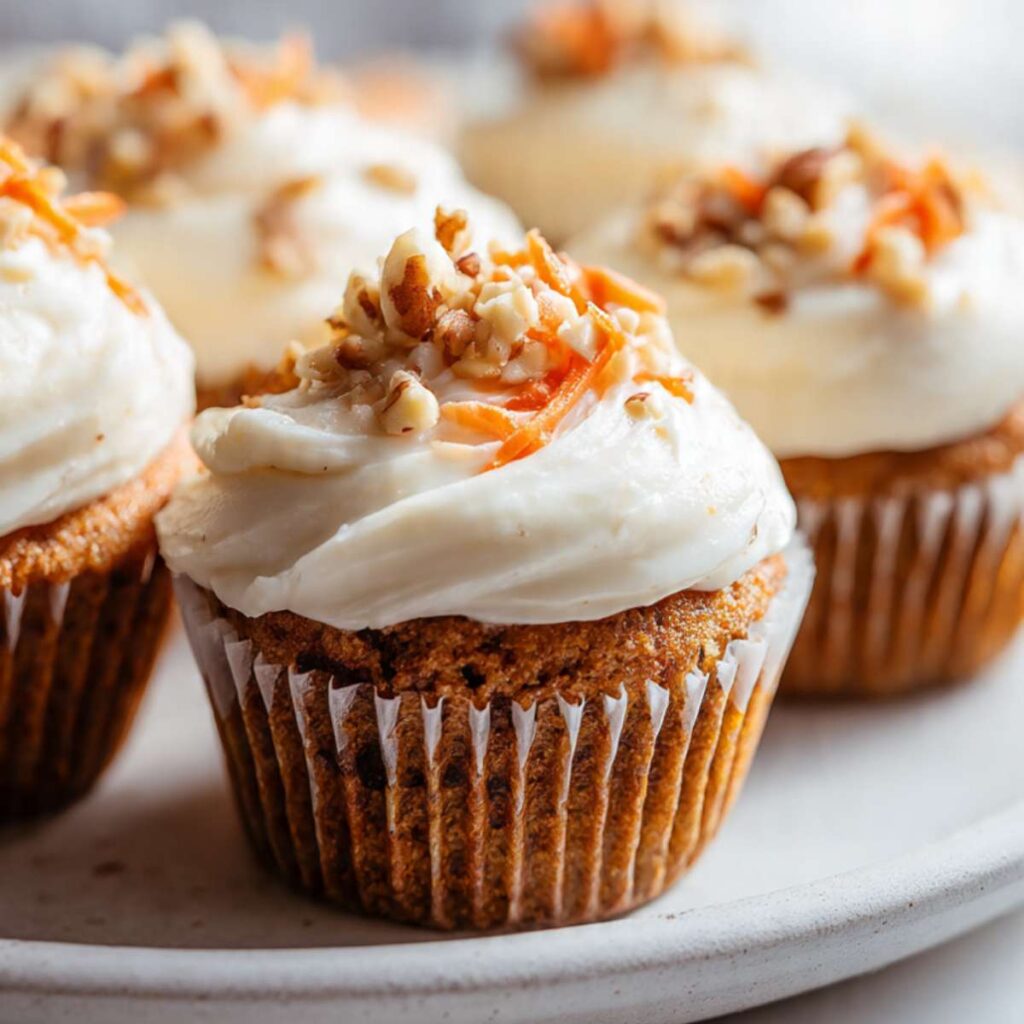
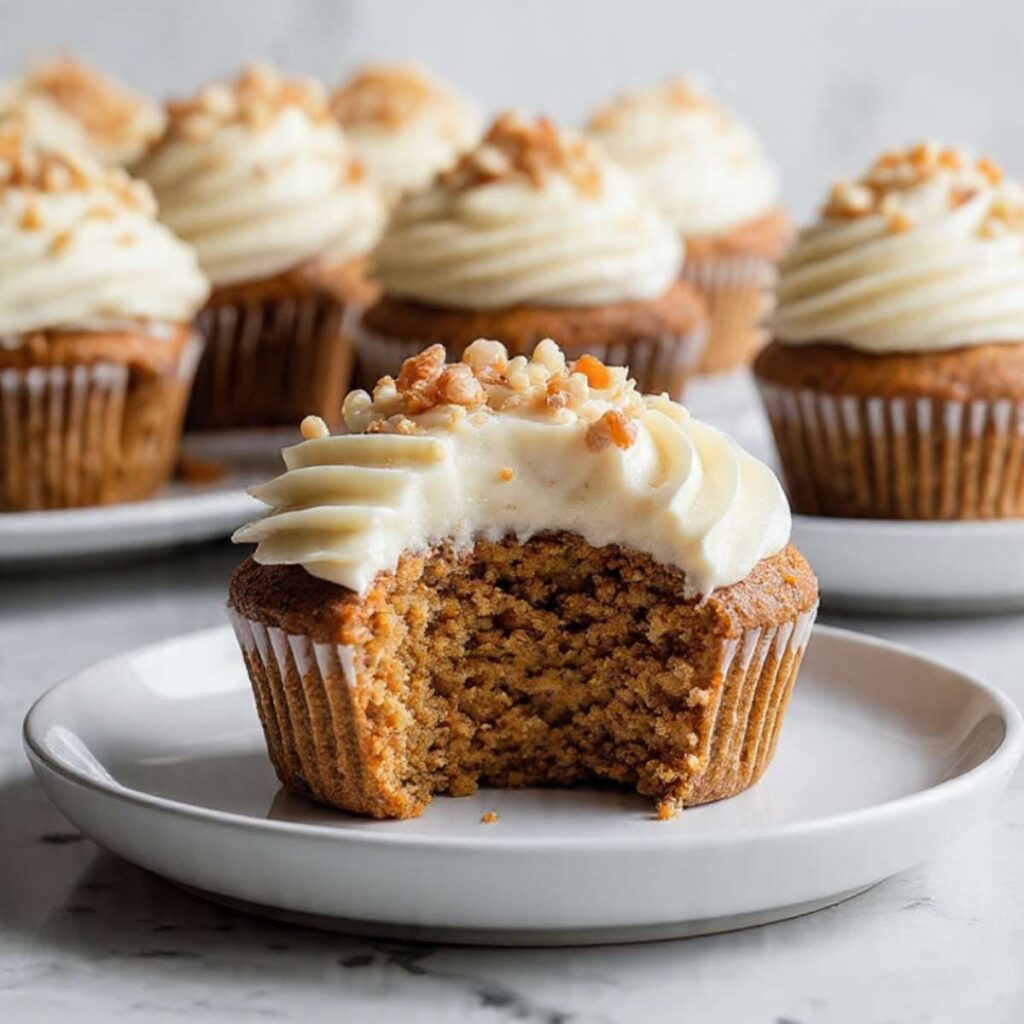
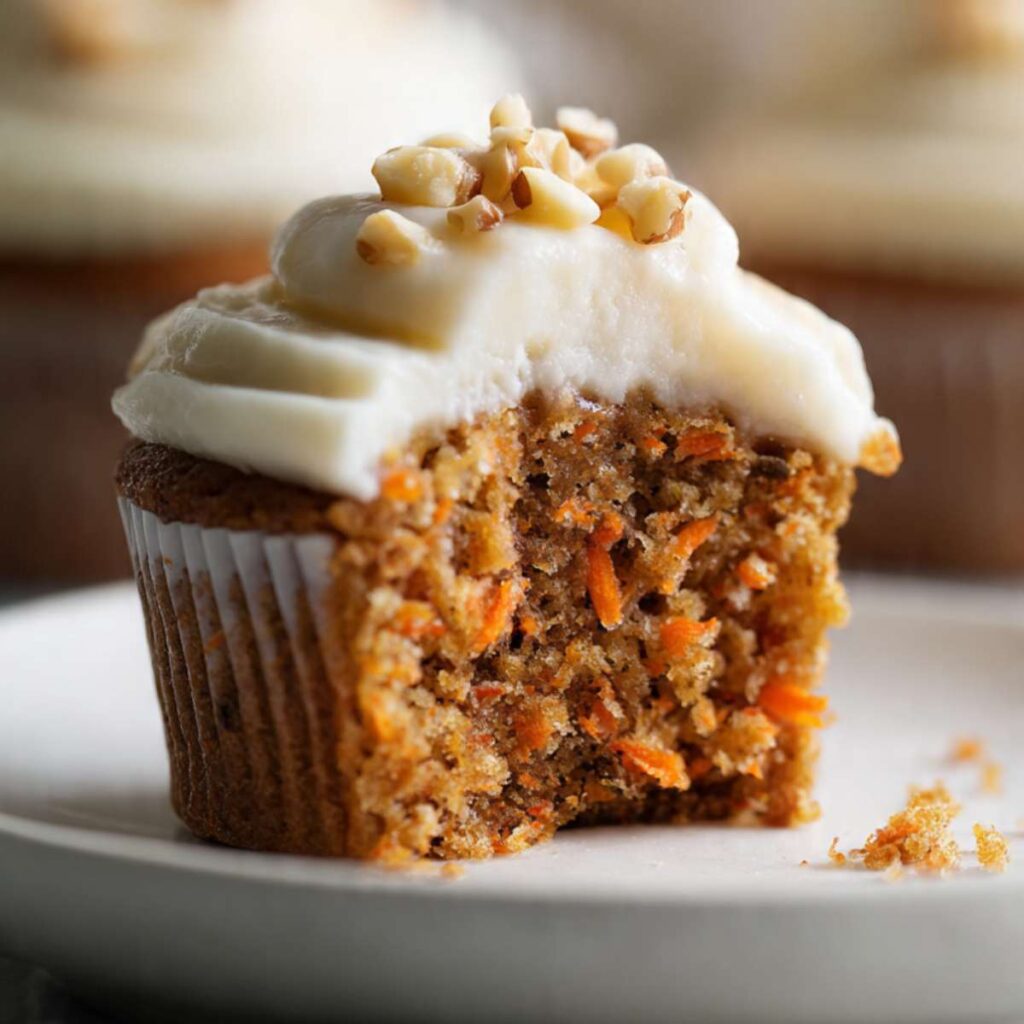
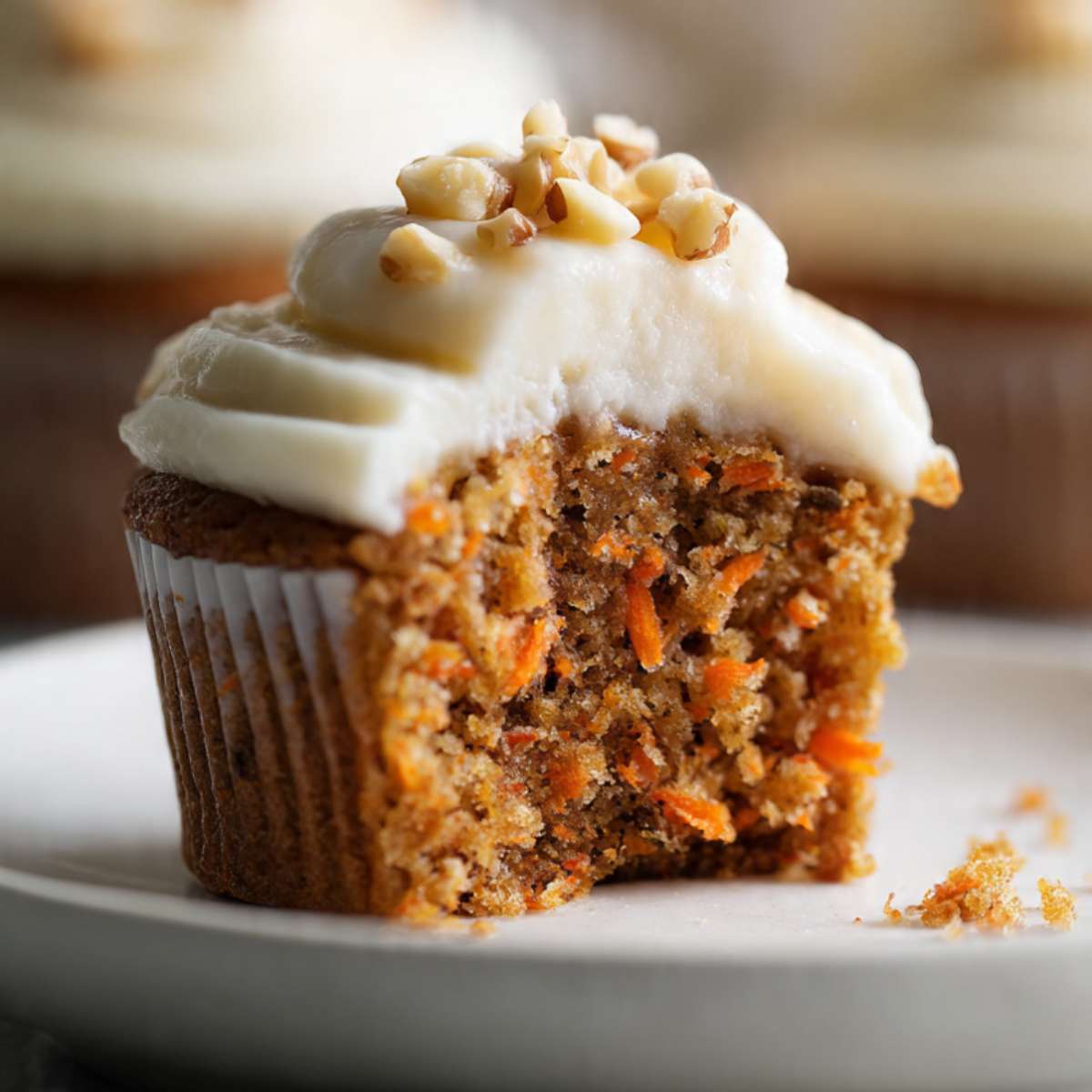
These carrot cake cupcakes stay moist longer than butter-based versions. The oil-based crumb holds its softness from the moment they come out of the oven through day two in the fridge. Visible medium-shred carrot strands run through every bite. The cream cheese frosting is thick, tangy, and stiff enough to pipe into a clean swirl that holds at room temperature.
I tested this recipe with both finely grated and medium-shred carrots. The fine grate disappeared into the batter and the cupcakes came out drier. The medium shred held onto moisture through the full 22-minute bake. That is the version I kept.
I also tested the frosting at 1½ cups of powdered sugar and at 2 cups. At 1½ cups it was too soft to pipe and slid off the dome. At 2 cups it held a clean swirl and stayed put at room temperature for hours. That is the only change I made from the original build.
| Prep Time | Cook Time | Cool Time | Total Time | Yield |
|---|---|---|---|---|
| 20 minutes | 22 minutes | 30 minutes | ~75 minutes | 12 cupcakes |
| Calories | Carbohydrates | Fat | Protein | Sugar |
|---|---|---|---|---|
| ~426 kcal | ~51g | ~24g | ~5g | ~36g |
Ingredients for Carrot Cake Cupcakes
These are the exact ingredients I use. Each one has a job. I will tell you what it does and what happens if you swap it.
For the Cupcakes
- 1 ½ cups All-Purpose Flour, spooned and leveled (180g): builds structure. Too much makes a dry, crumbly crumb. Spoon into the cup, do not scoop directly from the bag.
- 1 cup Granulated Sugar (200g): sweetness and moisture retention. Brown sugar works as a 1:1 swap and adds a faint molasses note.
- 2 large Eggs, room temperature (100g): bind the batter and create structure. Cold eggs cause the oil to seize and the batter to look broken. Pull them out of the fridge 30 minutes before you start.
- ½ cup Neutral Oil, such as vegetable or avocado oil (120ml): keeps the crumb moist after cooling. Oil stays liquid at room temperature. Butter does not. Do not substitute melted butter here.
- 1 ½ cups Carrots, medium-shred on a box grater, packed (165g): the primary moisture source. Fine grate dries out faster in the oven. Medium shred holds water through the full bake and stays visible in the crumb.
- ½ cup Walnuts or Pecans, roughly chopped into ¼-inch pieces (60g): adds texture contrast. Leave out entirely if needed. The method does not change.
- 1 teaspoon Baking Powder (4g): main lift agent. Creates the even dome visible in the photos. Do not substitute baking soda at a 1:1 ratio.
- ½ teaspoon Baking Soda (3g): works alongside the baking powder for an even rise. Both are needed. Removing one flattens the top.
- ¼ teaspoon Fine Sea Salt (1.5g): balances the sweetness and sharpens the carrot flavor. Do not skip.
For the Cream Cheese Frosting
- 8 oz Full-Fat Block Cream Cheese, softened to room temperature (226g): the base of the frosting. Low-fat or whipped cream cheese sold in tubs will not hold a piped swirl. Full-fat block only.
- 4 tablespoons Unsalted Butter, softened to room temperature (57g): adds body and helps the frosting hold its shape through piping. Must be softened, not melted. Melted butter makes the frosting runny.
- 2 cups Powdered Sugar, sifted (240g): stiffens the frosting to a pipeable consistency. At less than 2 cups the frosting slides off the dome. At more than 2½ cups it turns gritty.
For the Garnish
- ¼ cup Walnuts or Pecans, roughly chopped (30g): pressed into the frosting immediately after piping so they grip before the surface sets.
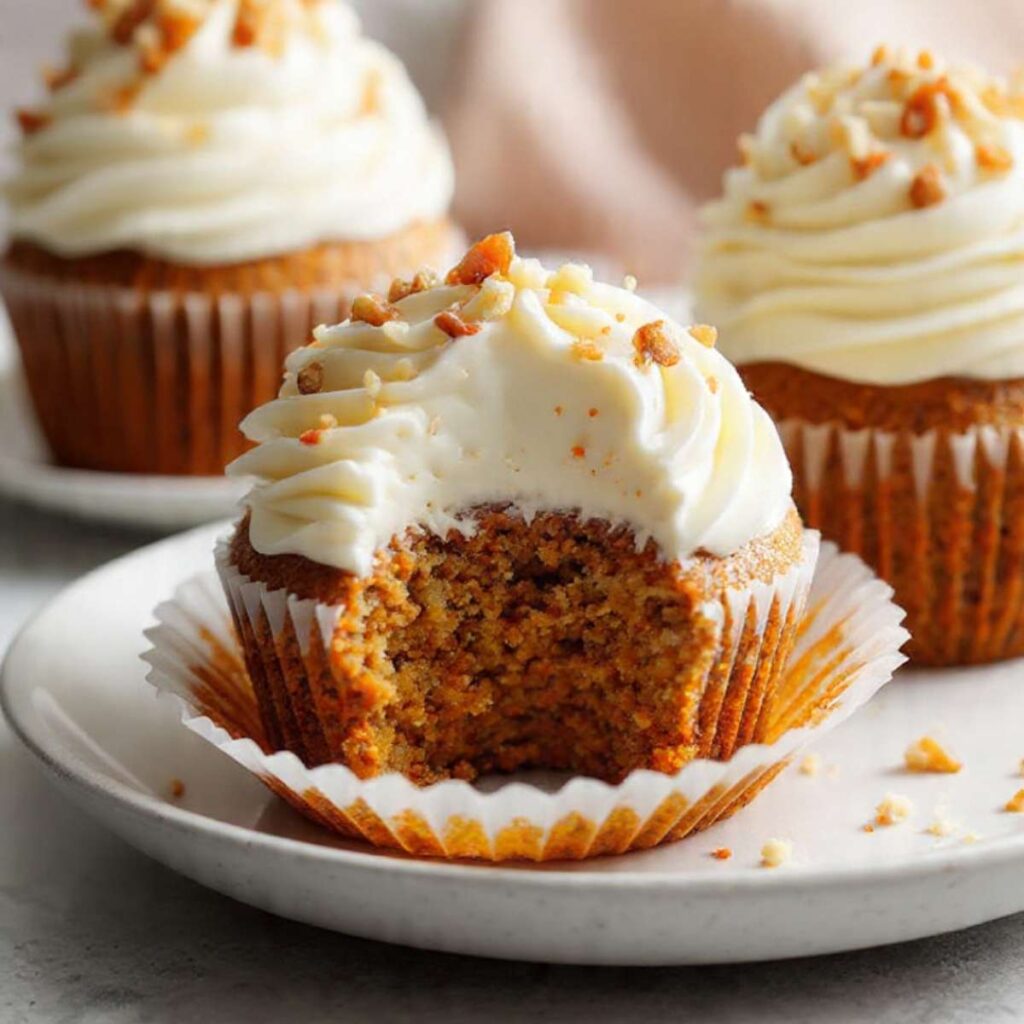
- Small pinch of medium-shred carrot strands: visual garnish only. Optional, as seen in the photos.
Necessary Tools
- Box grater: the medium-shred side specifically. A food processor shreds too fine and releases excess liquid.
- Two mixing bowls: one for dry, one for wet. No stand mixer needed for the batter.
- Hand mixer: essential for the frosting. Beating by hand will not get the cream cheese smooth enough.
- Standard 12-cup muffin pan with paper liners
- Piping bag with a large round or star tip: for the swirl shown in the photos. A zip-lock bag with the corner snipped works too.
- Kitchen scale: more reliable than cup measurements, especially for flour and powdered sugar.
Luna’s Habit Hack: Shred your carrots the night before and store them in an airtight container in the fridge. Morning baking gets 10 minutes faster and the carrots release a little extra moisture overnight, which only helps the crumb.
How to Make Carrot Cake Cupcakes
Step 1: Prepare Your Oven and Pan
Heat your oven to 350°F (175°C). Line a standard 12-cup muffin pan with paper liners before you mix anything.
Do not use dark-colored muffin pans. They absorb more heat and brown the bottoms before the centers finish baking. Light-colored aluminum pans only.
Your setup is complete when the lined pan sits on the counter and the oven reads 350°F (175°C).
Step 2: Whisk the Dry Ingredients for an Even Rise
In a medium bowl, whisk together 1 ½ cups (180g) all-purpose flour, 1 teaspoon (4g) baking powder, ½ teaspoon (3g) baking soda, and ¼ teaspoon (1.5g) fine sea salt.
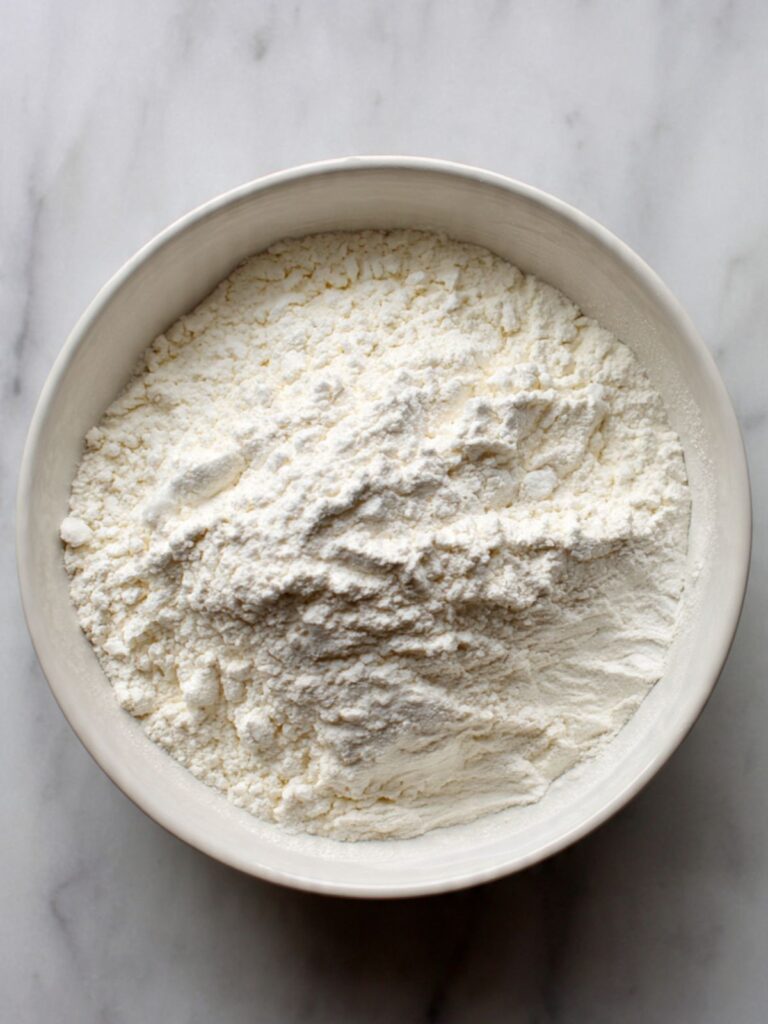
Whisk for a full 30 seconds. You are distributing the leavening evenly so every cupcake rises the same way.
Do not sift unless your flour is severely lumped. Spooning and leveling is enough.
The mixture looks uniform and pale, with no visible clumps of flour or pockets of leavening.
Step 3: Whisk the Wet Ingredients to Build the Emulsion
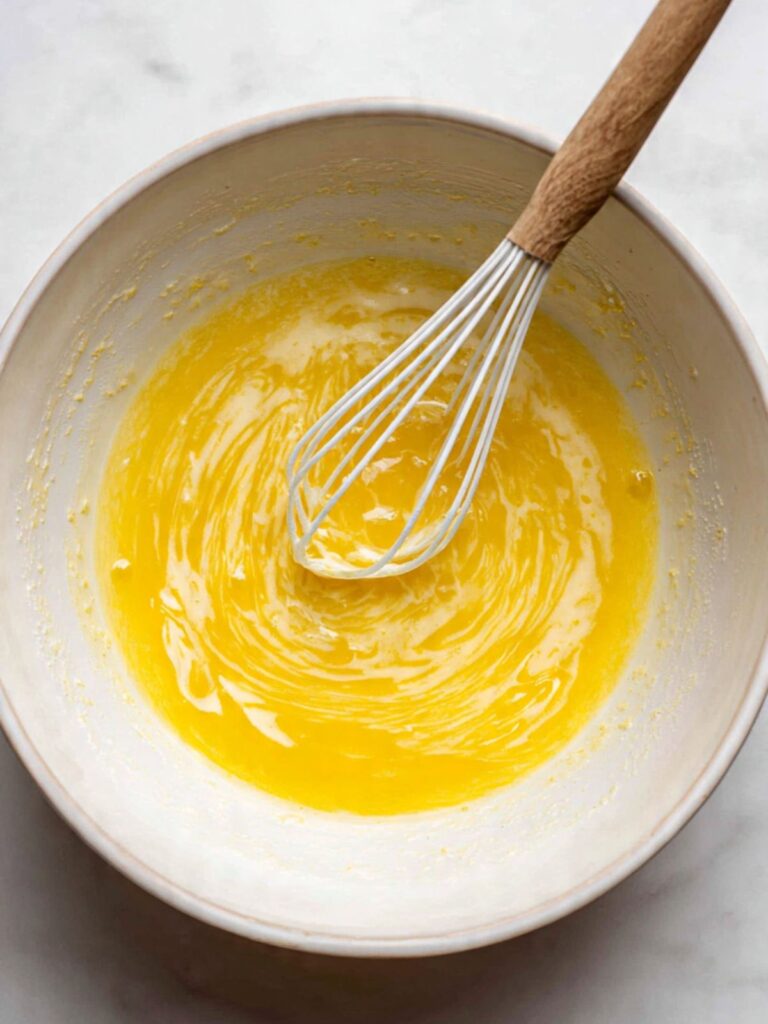
In a large bowl, whisk together 1 cup (200g) granulated sugar, 2 room-temperature eggs, and ½ cup (120ml) neutral oil.
Whisk vigorously for about 60 seconds. The lecithin in the egg yolks bonds the oil and water molecules together into a stable emulsion. That emulsion is what keeps the crumb tender.
Do not use cold eggs here. Cold eggs prevent the emulsion from forming and the batter will look broken and greasy.
The mixture looks glossy, slightly thickened, and pale yellow, with no visible streaks of egg.
Step 4: Fold Wet and Dry Together Without Overmixing
Add the dry ingredients to the large bowl of wet ingredients. Use a rubber spatula to fold them together with slow, sweeping strokes from the bottom of the bowl upward.
Stop the moment you no longer see dry flour. The batter looks thick, slightly rough-textured, and scoopable.
Do not keep folding past this point. Overmixing develops gluten and the cupcakes bake up dense and rubbery instead of soft. Ten folds is usually enough.
The batter holds its shape when you lift the spatula and drops in a slow, heavy ribbon.
Step 5: Fold in the Carrots and Nuts
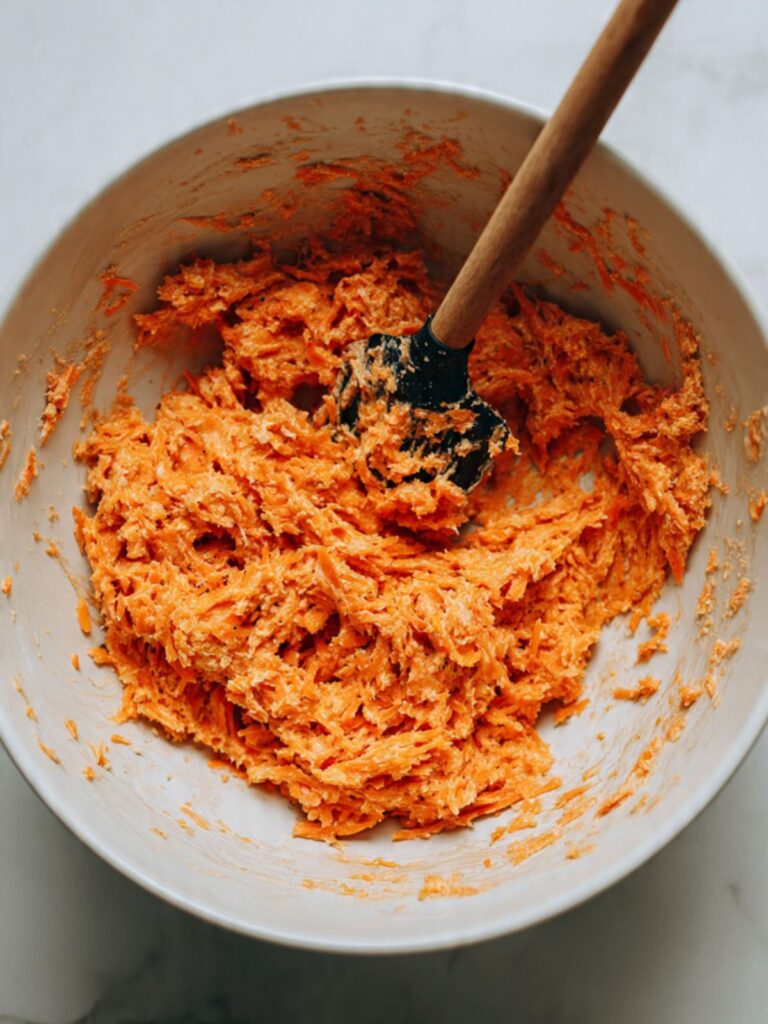
Add 1 ½ cups (165g) medium-shred carrots and ½ cup (60g) roughly chopped walnuts or pecans to the bowl.
Fold gently with the spatula until the carrots and nuts are distributed evenly with no dry clumps sitting at the bottom.
Do not squeeze moisture out of the carrots before adding. That moisture is what keeps the crumb structure soft through the full bake.
The batter looks heavy and loaded with visible orange carrot pieces throughout.
Step 6: Fill the Liners to Three-Quarters Full
Use a large cookie scoop (about 3 tablespoons) or spoon to divide the batter evenly among the 12 lined cups.
Do not fill past three-quarters full. Overfilling causes the tops to spread flat and spill over the edges instead of doming cleanly.
Each cup looks generously filled with a slightly mounded top, not level or overflowing.
Step 7: Bake Until the Centers Show Moist Crumbs
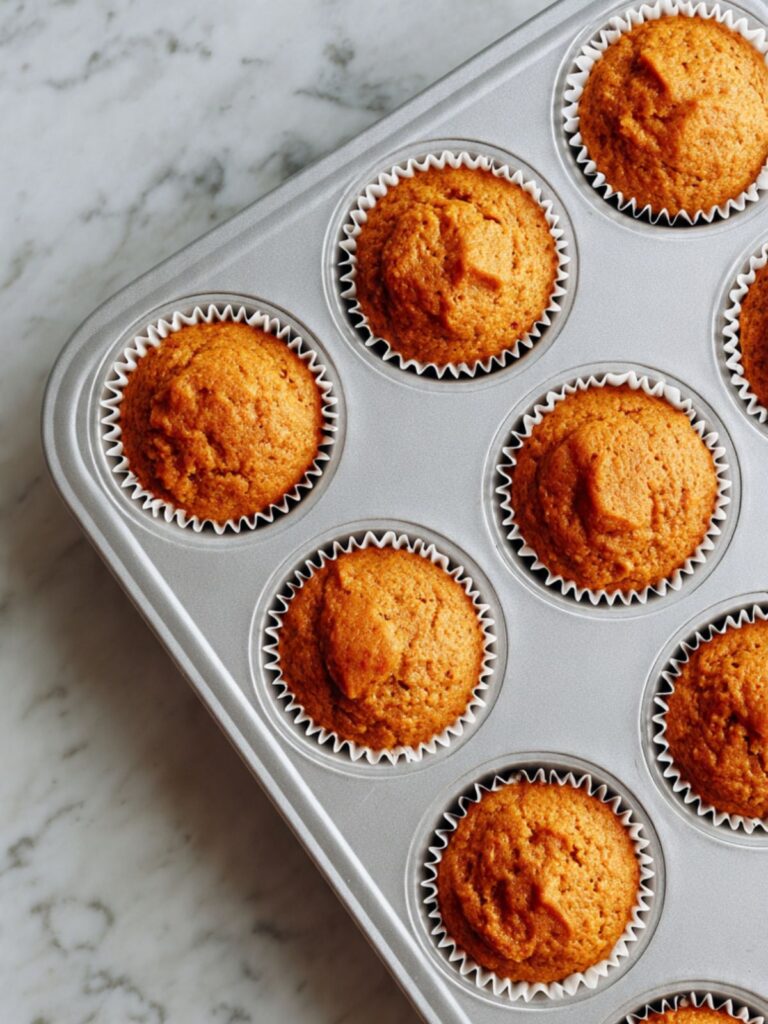
Place the pan on the center rack of the oven. Bake for 20 to 22 minutes.
At the 20-minute mark, insert a toothpick into the center of one cupcake. You are looking for moist crumbs, not wet batter and not a clean toothpick. A clean toothpick means overbaked.
Keep the oven door closed until the 18-minute mark. Opening it early causes the centers to sink.
The tops look set and lightly golden, and spring back when pressed lightly with one finger.
Step 8: Cool Completely Before Frosting
Remove the pan from the oven. Let the cupcakes cool in the pan for 5 minutes, then transfer to a wire rack.
Cool completely, at least 30 minutes, before frosting. Do not frost warm cupcakes. The frosting slides off the dome and pools around the base.
The cupcakes feel cool to the touch on the sides and bottom before any frosting goes on.
Step 9: Make the Frosting and Pipe the Swirl
In a large bowl, beat 8 oz (226g) room-temperature full-fat cream cheese and 4 tablespoons (57g) softened butter together with a hand mixer on medium speed for 2 full minutes.
Add 2 cups (240g) sifted powdered sugar. Start the mixer on low to avoid a sugar cloud, then increase to medium-high. Beat for another 2 minutes.
Do not skip sifting the powdered sugar. Unsifted lumps do not beat out fully and leave a gritty texture in the finished frosting.
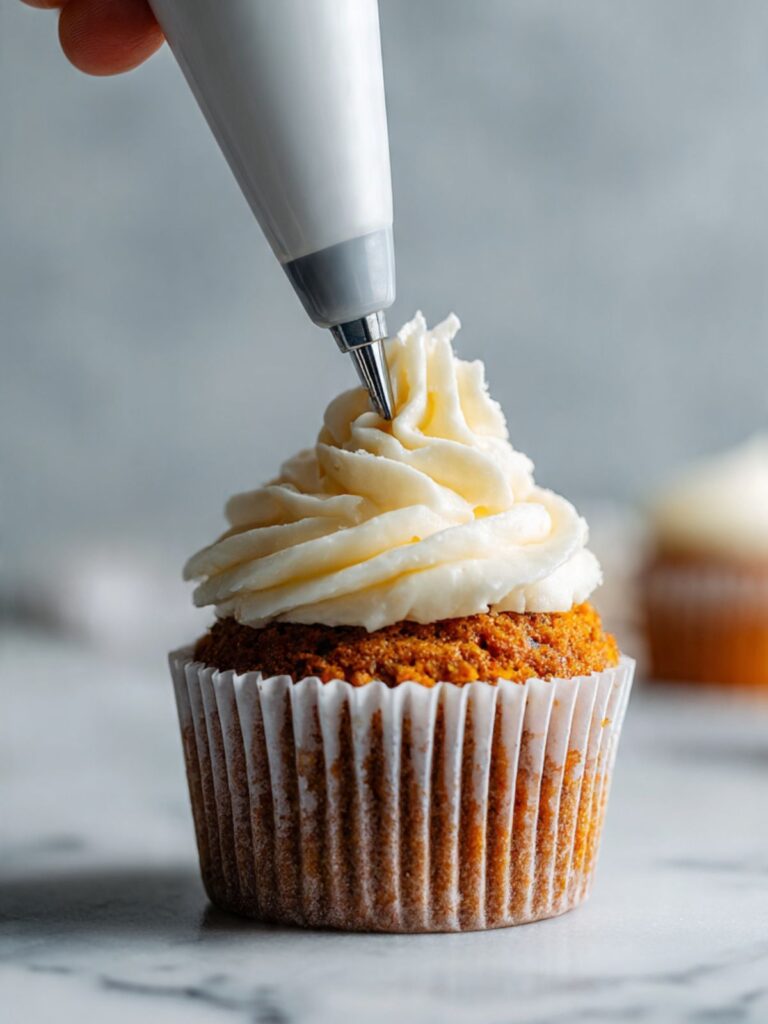
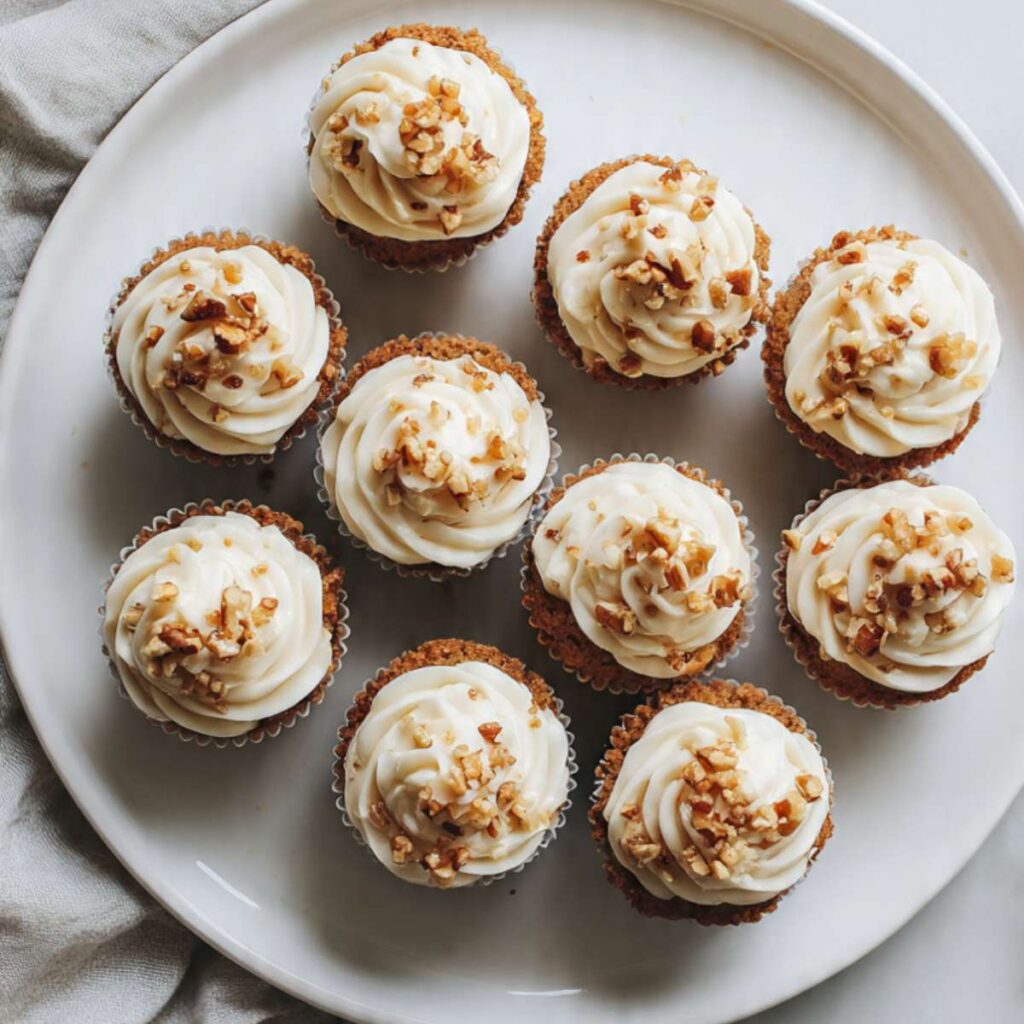
Fit a piping bag with a large round or star tip. Pipe a tall swirl starting from the outer edge of each cupcake, working inward and upward to a center peak. Finish with chopped nuts and carrot strands if using.
The frosting holds its peak immediately after piping and does not slide or spread at room temperature.
The Science Behind Moist Carrot Cake Cupcakes
Why Oil Produces a Softer Crumb Than Butter
Oil is 100% fat. Butter is about 80% fat, 18% water, and 2% milk solids. When you bake with butter, that water evaporates in the oven and the crumb firms up as it cools. When you bake with oil, none of that water loss happens. The fat stays liquid at room temperature, which means the crumb stays soft and moist hours after baking. That is why these cupcakes taste the same on day one and day two.
What Carrots Do Inside the Batter
Carrots are about 88% water by weight. During baking, that water releases slowly into the surrounding crumb. It keeps the internal temperature of the cupcake lower for longer, which slows the starch-setting process and keeps the crumb structure tender instead of firm. Medium-shred carrot strands hold more of that water than a fine grate. The shred size in this recipe is not a suggestion.
The Emulsification Step and Why It Matters
Whisking the eggs, sugar, and oil together vigorously creates an emulsion. Oil and water do not mix on their own. The lecithin in egg yolks acts as an emulsifier, bonding fat and water molecules together into a stable, uniform batter. A broken emulsion produces a greasy crumb with uneven texture. That 60-second whisk in Step 3 is doing real structural work.
Troubleshooting Your Carrot Cake Cupcakes
3 Common Mistakes That Ruin the Texture
My cupcakes came out dense and heavy. Dense cupcakes result from overmixed batter or too much flour. Overmixing develops gluten, which tightens the crumb structure. Too much flour, from scooping directly out of the bag, compresses the measurement by 20 to 30%. Use the spoon-and-level method and stop folding the moment the flour disappears.
My frosting is too soft and will not hold its shape. Soft frosting is caused by cream cheese or butter that is too warm, or not enough powdered sugar. If the kitchen is above 75°F (24°C), the fats warm up fast. Beat the frosting, then refrigerate it for 15 minutes before piping. Use full-fat block cream cheese only. The whipped kind sold in tubs does not hold a piped swirl.
The cupcakes sank in the center. A sunken center means the batter was underbaked or the oven door was opened before the 18-minute mark. The structure had not set before the heat escaped. Bake to the full 22 minutes, check with a toothpick, and keep the door closed until at least minute 18.
3 Expert Pro-Tips
1. Do not squeeze the carrots. Some recipes tell you to press excess moisture out of the shredded carrots before adding. Do not do that here. That moisture is what keeps the crumb soft through the full bake and through day-two storage.
2. Sift the powdered sugar. Unsifted powdered sugar has tiny lumps that do not beat out fully. They leave a slightly gritty texture in the finished frosting. 30 seconds of sifting fixes it completely.
3. Use a cookie scoop to fill the liners. A large cookie scoop, about 3 tablespoons, gives consistent fill levels across all 12 cups. Consistent fill means consistent bake time. No more guessing which ones need 2 more minutes.
How to Store Carrot Cake Cupcakes
Room Temperature
Frosted carrot cake cupcakes keep at room temperature for up to 2 days in an airtight container. Stack them in a single layer only. The frosting dents and transfers if stacked.
Cream cheese frosting left unrefrigerated above 72°F (22°C) for more than 2 hours softens and loses its piped shape. Move them to the fridge if your kitchen runs warm.
Refrigerator
Refrigerate frosted cupcakes in an airtight container for up to 4 days. The cold firms up the cream cheese frosting and the oil-based crumb stays moist throughout. Pull them out 20 minutes before serving. Cold frosting straight from the fridge is dense and the flavor is muted.
Freezer
Unfrosted cupcakes freeze well for up to 2 months. Wrap each cupcake individually in plastic wrap, then place in a zip-lock freezer bag. Thaw overnight in the fridge or at room temperature for 1 hour. Frost after thawing.
Frosted cupcakes can be frozen, but the frosting texture changes slightly after thawing. Place frosted cupcakes on a baking sheet uncovered for 1 hour to harden the swirl, then wrap individually. Thaw in the fridge overnight.
If you enjoy making cupcakes ahead and freezing them, strawberry crunch cupcakes recipe uses the same make-ahead and freeze workflow.
Carrot Cake Cupcakes: Frequently Asked Questions
Can I make carrot cake cupcakes ahead of time?
Carrot cake cupcakes are best made 1 day ahead, baked and unfrosted, then frosted the day of serving. The oil-based crumb structure improves slightly overnight as the moisture from the carrots continues to distribute through the crumb. Store the baked, unfrosted cupcakes covered at room temperature and refrigerate the frosting separately in an airtight container. Beat the frosting briefly before piping to restore its texture.
Why are my carrot cake cupcakes dry?
Dry carrot cake cupcakes are caused by too much flour, overbaking past 22 minutes, or using finely grated carrots instead of medium-shred. Fine-grated carrots release their moisture too quickly in the oven and it evaporates before the crumb structure absorbs it. Medium-shred holds water longer, keeping the crumb tender through the full bake. Check doneness at 20 minutes with a toothpick and pull when you see moist crumbs, not wet batter and not a clean toothpick.
Do I need to refrigerate carrot cake cupcakes?
Carrot cake cupcakes with cream cheese frosting need refrigeration after 2 days at room temperature. Cream cheese is a dairy product and the frosting develops off-flavors if left unrefrigerated for more than 48 hours, especially in a warm kitchen. For the best crumb structure, store at room temperature on day one, then move to an airtight container in the fridge from day two onward. The gluten development in the baked crumb holds its texture well under refrigeration. Always bring to room temperature before serving so the frosting softens and the flavor comes back.

Moist Carrot Cake Cupcakes with Cream Cheese Frosting
Ingredients
Equipment
Method
- Preheat oven to 350°F (175°C). Line a 12-cup muffin pan with paper liners.
- In a medium bowl, whisk flour, baking powder, baking soda, and salt for 30 seconds.
- In a large bowl, whisk sugar, eggs, and oil for 60 seconds until glossy and smooth.
- Add dry ingredients to the wet bowl. Fold with a spatula until no dry flour remains. Do not overmix.
- Fold in shredded carrots and chopped nuts until evenly distributed.
- Divide batter evenly among the 12 liners, filling each about three-quarters full.
- Bake on the center rack for 20 to 22 minutes, until a toothpick inserted in the center comes out with moist crumbs.
- Cool in the pan for 5 minutes, then transfer to a wire rack. Cool completely before frosting.
- Beat cream cheese and butter together on medium speed for 2 minutes until smooth and lump-free.
- Add sifted powdered sugar. Beat on low, then medium-high for 2 minutes until thick and glossy.
- Pipe frosting onto cooled cupcakes. Top with chopped nuts and carrot strands if using.
Notes
or refrigerated for up to 4 days. Bring to room temperature before serving. – Freeze: Wrap unfrosted cupcakes individually and freeze for up to 2 months.
Thaw and frost after. – Substitution: Walnuts or pecans can be omitted with no change to the method.
Brown sugar substitutes for granulated sugar at a 1:1 ratio. – Tip: Do not squeeze moisture from the carrots before adding. That moisture
keeps the crumb soft. – Make-ahead: Bake cupcakes 1 day ahead. Frost the day of serving for best results.