
Ingredients
Equipment
Method
- Position the oven rack in the middle and preheat to 350°F (175°C), then line a light-colored aluminum baking sheet with parchment paper and set aside.
- In a large mixing bowl using a hand mixer or stand mixer fitted with the paddle attachment, beat the ½ cup (113g) unsalted butter and ¾ cup (150g) plain white granulated cane sugar on medium speed for exactly 2 minutes until pale, slightly fluffy, and uniform.
- Add the 1 large room temperature egg and 1 teaspoon (5ml) pure vanilla extract and beat on medium speed for 30–45 seconds until fully combined and glossy, then scrape down the sides and bottom of the bowl with a silicone spatula.
- Add the 1½ cups (180g) all-purpose flour, 1 teaspoon (4g) baking powder, and ¼ teaspoon (1.5g) fine sea salt and fold with a silicone spatula using slow strokes from the bottom of the bowl upward for approximately 20–25 strokes until no dry flour streaks remain and the dough looks soft, thick, and scoopable.
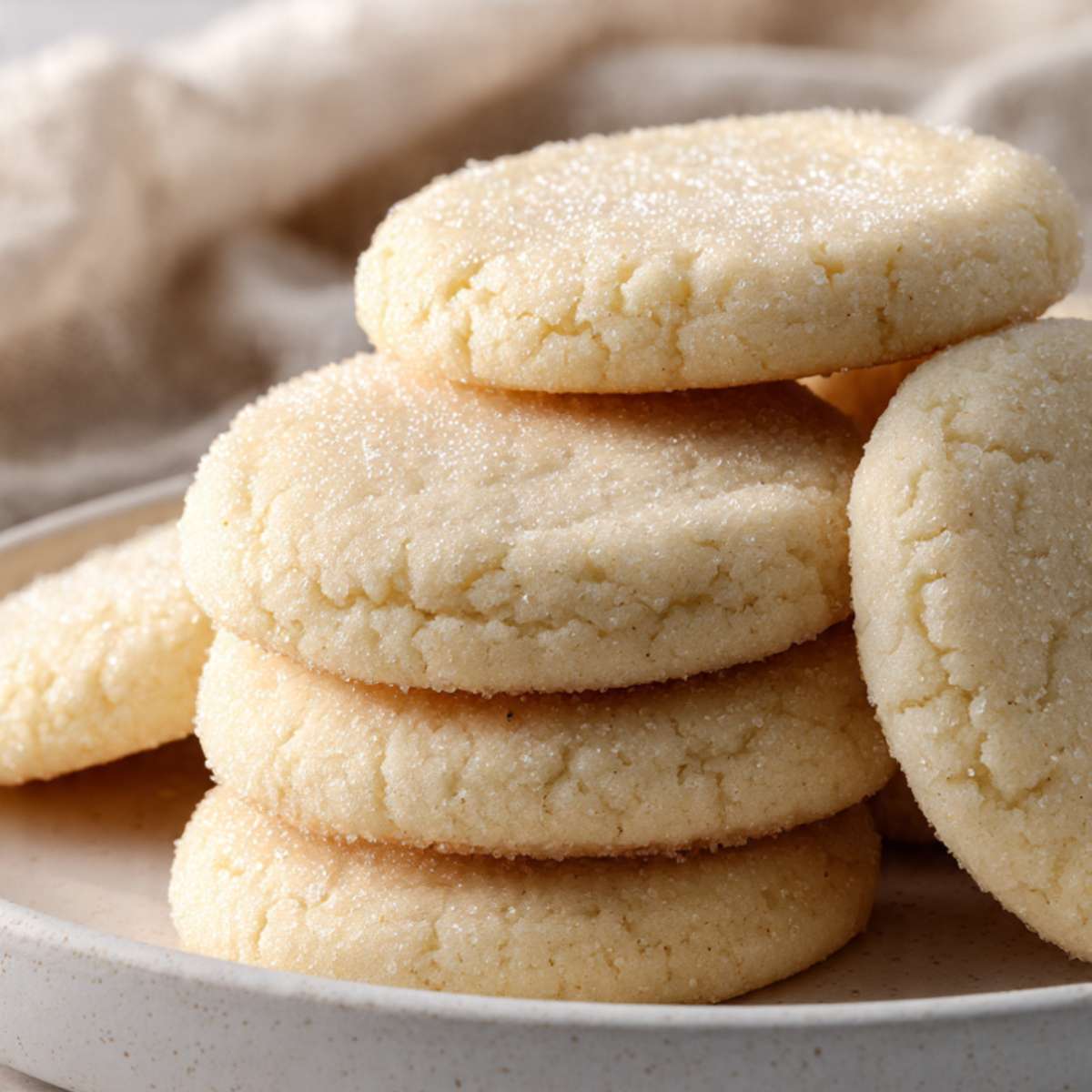
- Place 2 tablespoons (25g) plain white granulated cane sugar in a small shallow bowl, scoop dough into 40–45g balls using a 2-tablespoon cookie scoop, roll each ball in the sugar immediately before placing on the prepared pan, and space the balls at least 2 inches (5cm) apart.
- Bake on the middle rack at 350°F (175°C) for 10–12 minutes until the edges look just set and very lightly golden while the centers still appear pale, slightly puffy, and underdone.
- Leave the cookies on the hot pan for exactly 5 minutes without moving them, then transfer to a wire cooling rack and cool for 15–20 minutes until the edges firm up while the centers stay soft.
Notes
- Butter: must be unsalted and softened to 65–68°F (18–20°C) — butter above 70°F (21°C) produces flat, greasy cookies that spread before the edges set
- Granulated sugar: use plain white granulated cane sugar only — coconut sugar, raw sugar, and liquid sweeteners change the texture and eliminate the crinkled surface crust
- Flour: spoon into the measuring cup and level — do not scoop directly from the bag or weigh at 180g for guaranteed accuracy
- Baking powder: check freshness before baking — drop 1 teaspoon into ½ cup hot water, it must bubble immediately and vigorously
- Vanilla: use pure vanilla extract only — vanilla is the primary flavor note in this recipe and imitation vanilla produces a sharp, synthetic taste that is impossible to hide in a cookie with no competing flavors
- Rolling sugar: roll each dough ball immediately before placing on the pan — rolling in advance allows the sugar to absorb into the dough surface and eliminates the crinkle
- Storage: lidded hard-sided container with parchment between layers at room temperature for 4–5 days — do not use zip-lock bags
- Freeze unbaked: portion into balls without rolling in sugar, freeze solid on a pan, transfer to a freezer bag for up to 3 months — roll in sugar directly from frozen and bake at 350°F (175°C) for 13–15 minutes
- Freeze baked: wrap individually in plastic wrap, then place in a freezer bag for up to 2 months — thaw at room temperature for 30–45 minutes
- Make ahead: baked cookies keep at room temperature for up to 5 days — Day 2 texture is slightly better than Day 1 as moisture redistributes through the crumb
- Scaling: to double, multiply all ingredients by 2 except baking powder — use only 1½ teaspoons (6g) instead of 2 teaspoons (8g) as leavening does not scale linearly
- Altitude: above 3,500 feet (1,067 meters) reduce baking powder by ¼ teaspoon, increase flour by 1 tablespoon (8g), reduce sugar by 1 tablespoon (12g), and check at 9 minutes
- Allergens: contains gluten, dairy, and eggs
- Tip: bake one test cookie first — if it spreads too flat, refrigerate the remaining dough for 15 minutes before baking the rest of the batch