
Ingredients
Equipment
Method
- Position oven rack in the middle and heat to 325°F (163°C), then lightly grease all 16 cavities of a silicone donut mold (3-inch diameter) with neutral oil or cooking spray and set the mold on a light-colored aluminum half-sheet pan.
- In a medium heavy-bottomed saucepan over medium heat, combine ⅔ cup (130g) granulated sugar, ¼ cup (57g) unsalted butter, and ¼ cup (60ml) heavy whipping cream, stirring constantly until the butter melts and sugar dissolves.
- Once the mixture reaches a full rolling boil, stop stirring, clip a candy thermometer to the pan, and cook without stirring until the temperature reads 235–240°F (113–115°C) — the soft-ball stage.
- Remove the pan from heat, stir in 1 tsp (4g) pure vanilla extract and ¼ tsp (1.5g) fine sea salt, then immediately add 3 cups (255g) sweetened shredded coconut and fold with a silicone spatula in 15 slow strokes until every strand is fully coated.
- Add 2 large room-temperature egg whites and fold in 8–10 strokes until no streaks of white remain.
- Working quickly, portion approximately 2 tablespoons (35g) of coconut mixture per mold cavity, press firmly and evenly with dampened fingertips until level with the top of the cavity, and keep the center hole clear.
- Bake at 325°F (163°C) for 12–14 minutes until the coconut at the base and edges is deep golden amber and the tops are pale cream to light gold.
- Remove from the oven and leave the rings in the mold on the pan for exactly 10 minutes, then gently peel the silicone mold away from each ring and transfer flat-side down to a wire cooling rack.
- Allow rings to cool completely at room temperature for approximately 30 minutes before applying the chocolate finish.
- In a small microwave-safe bowl, combine 4 oz (113g) finely chopped dark chocolate and 1 tsp (4g) refined coconut oil, then microwave at 50% power in 20-second bursts, stirring between each, until fully melted and smooth.
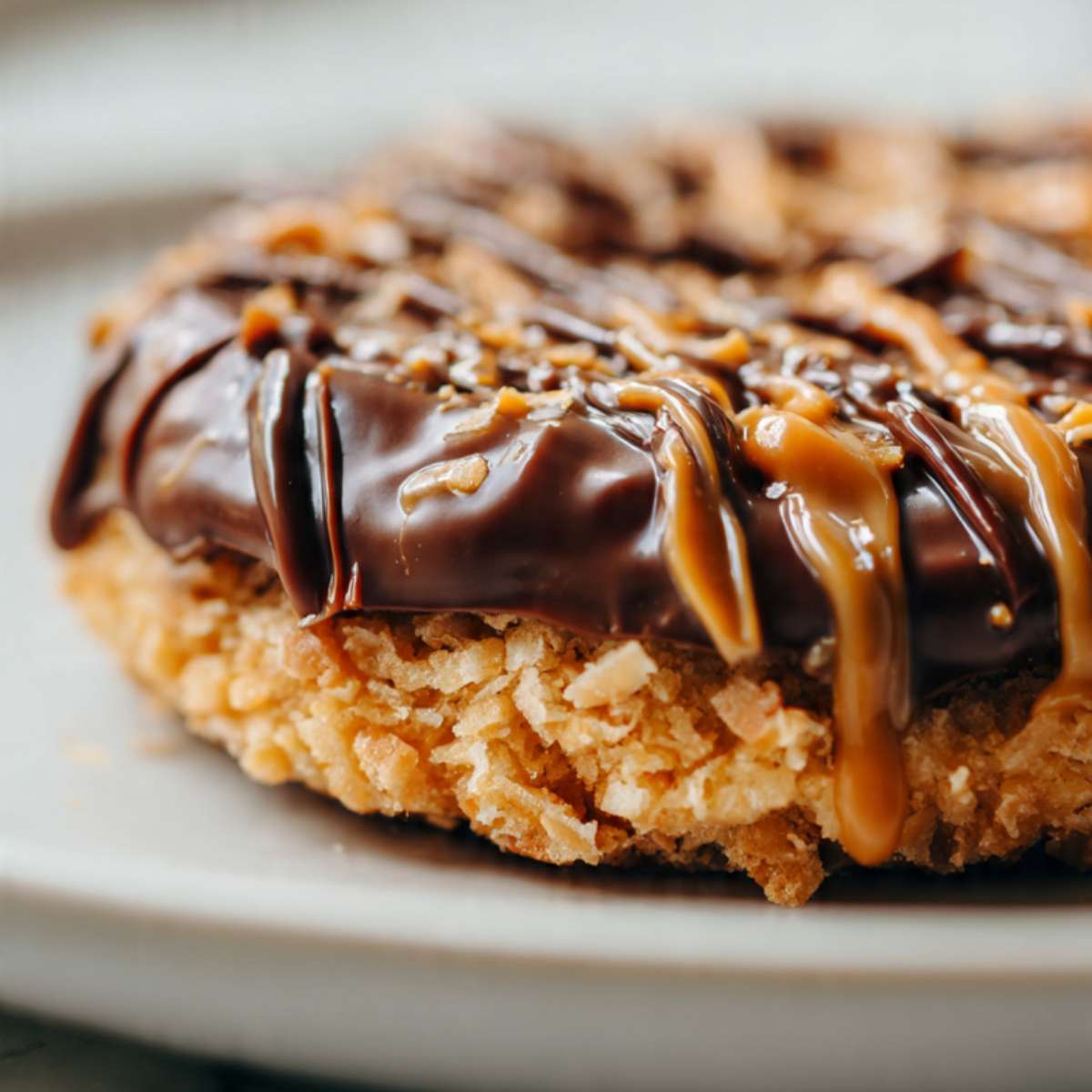
- Spoon approximately 1½ teaspoons of melted chocolate onto the top of each ring and spread with the back of a spoon or small offset spatula to cover the top surface evenly.
- In a small clean saucepan over medium heat, cook ¼ cup (50g) granulated sugar without stirring until fully melted and deep amber, then remove from heat, carefully stir in 2 tbsp (30ml) warmed heavy cream, 1 tbsp (14g) butter, and a pinch of salt until smooth, and allow to cool 3–4 minutes until slightly thickened but still pourable.
- Transfer caramel to a piping bag or squeeze bottle and drizzle in thin lines over the wet chocolate top of each ring.
- Immediately sprinkle 2 tbsp (15g) finely chopped toasted coconut or coconut toffee bits over the wet chocolate and caramel, pressing lightly to adhere.
- Allow cookies to set at room temperature for 20–25 minutes until the chocolate is fully firm, then serve or store in a rigid airtight container with parchment between layers.
Notes
- Coconut: use sweetened shredded medium-shred only — desiccated or unsweetened coconut will not bind or toast correctly.
- Caramel binder: must reach 235–240°F (113–115°C) — use a thermometer. Below this temp the rings will not hold their shape.
- Egg whites: room temperature only — cold whites streak and do not distribute evenly through the warm mixture.
- Heavy cream: 36% fat minimum in both the binder and the caramel drizzle — lower fat changes the set texture.
- Chocolate: 60–70% cacao bar chocolate recommended — chips with stabilizers may not melt or set cleanly.
- Mold: silicone donut mold required — metal donut pans cause the caramel to fuse and rings will not release intact.
- Storage: rigid airtight container, parchment between layers, room temperature up to 4 days — do not stack directly.
- Freeze finished: flash-freeze 1 hour uncovered, then airtight container with parchment, up to 6 weeks — thaw 25–30 min at room temperature, do not microwave.
- Freeze unbaked: press into molds, freeze solid, wrap individually, bake from frozen adding 3–4 minutes — do not thaw first.
- Make ahead: caramel binder can be made up to 2 hours ahead and rewarmed gently over low heat before adding coconut.
- Scaling: this recipe doubles reliably — make the caramel in two separate batches rather than one large batch for consistent temperature control. Leavening does not apply here.
- Altitude: above 3,500 ft (1,067m), reduce caramel target temperature by 2°F per 1,000 ft above sea level — at 5,000 ft target 231–236°F (111–113°C).
- Allergens: contains dairy and eggs. Chocolate may contain soy — check the label. Naturally gluten-free.
- Tip: dampen fingertips with cold water when pressing mixture into molds — prevents sticking and allows firm, even pressure.