
Ingredients
Equipment
Method
- Position oven rack in the middle and preheat to 350°F (175°C) for at least 15 minutes, then line a light-colored aluminum baking sheet with parchment paper — do not grease the pan and do not use a dark non-stick pan.
- In a large mixing bowl using a silicone spatula, stir together the creamy commercial peanut butter, granulated cane sugar, and packed brown sugar in wide bottom-up circular strokes for approximately 25 to 30 strokes until completely smooth, thick, and glossy with no sugar streaks remaining.
- Add the room-temperature egg and stir for approximately 15 to 20 strokes until fully incorporated with no white or yolk streaks visible — stop mixing as soon as the egg disappears into the dough.
- Spoon the flour into the measuring cup and level it off, then sprinkle it over the dough along with the baking soda and fine sea salt, and fold slowly with approximately 10 to 15 strokes just until no dry flour remains — do not overmix.
- Fold in the semi-sweet chocolate chips with approximately 10 to 12 slow bottom-up strokes until evenly distributed through the dough.
- Scoop mounds of exactly 2 tablespoons (45g) each onto the prepared baking sheet leaving at least 2 inches (5cm) between each mound — do not flatten the dough.
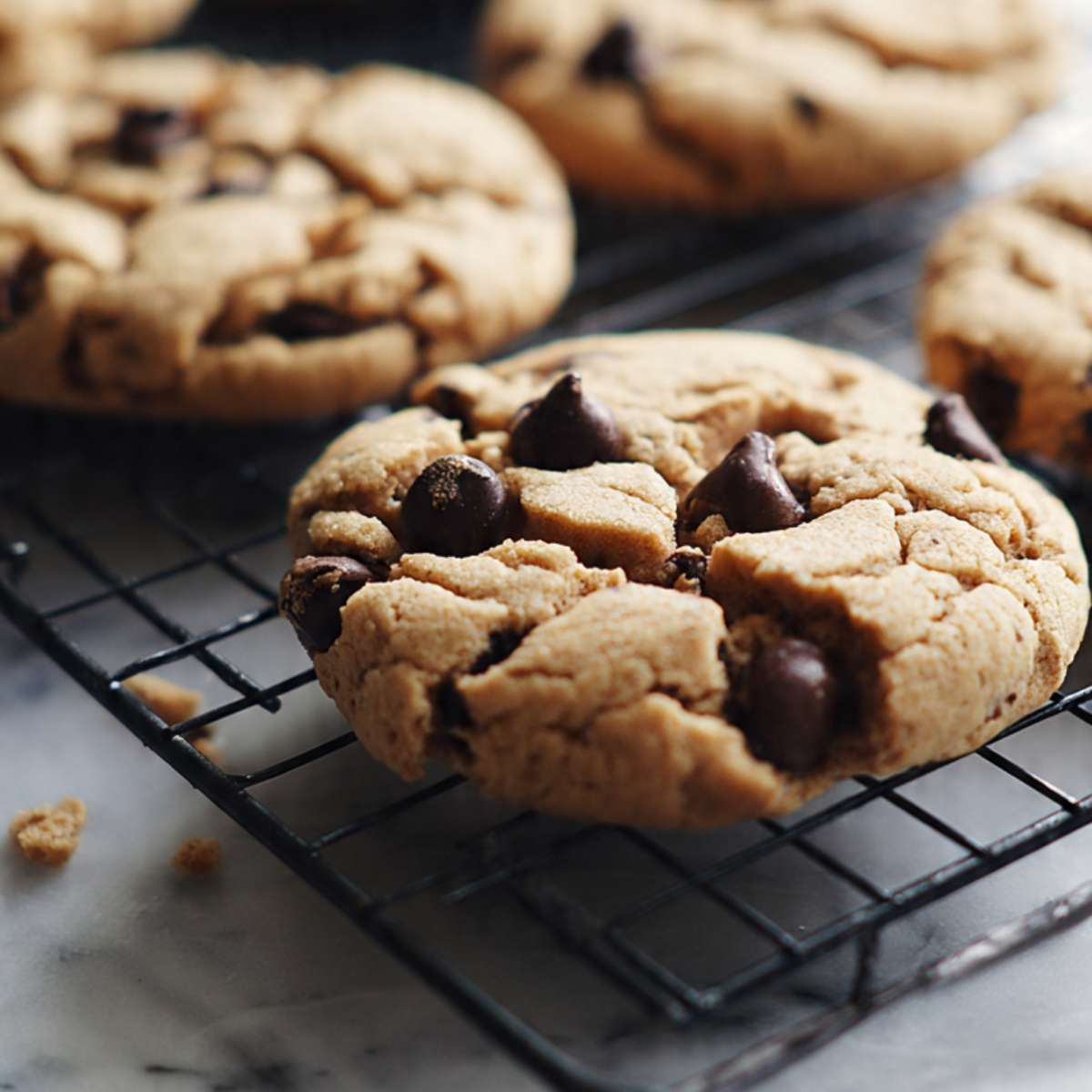
- Bake on the middle rack at 350°F (175°C) for 10 to 12 minutes until the edges are set and lightly golden with a faint surface crackle and the centers still look soft and slightly underdone — do not wait for the centers to look fully set.
- Leave cookies on the hot pan for exactly 5 minutes — do not move them — then slide the parchment onto a wire cooling rack and cool for at least 10 more minutes before eating.
Notes
- Peanut butter: Use a commercial creamy brand like Jif or Skippy. Natural peanut butter where the oil separates will produce sandy dough that does not hold together — do not substitute.
- Granulated sugar: Use plain white granulated cane sugar only. Coconut sugar, raw sugar, or liquid sweeteners change the spread, surface crackle, and texture.
- Flour: Spoon into the measuring cup and level off — do not scoop from the bag. Scooping packs in 20 to 30 percent more flour and makes the cookies dry and dense. For guaranteed accuracy weigh at exactly 60g.
- Baking soda: Test freshness before using — drop ½ tsp into hot water with a splash of vinegar. Replace if it does not bubble aggressively within 2 seconds.
- Egg: Use a large egg at room temperature. Pull from the fridge 30 minutes before mixing. Emergency method: submerge in warm water for 10 minutes.
- Pan: Use a light-colored aluminum baking sheet lined with parchment. Dark pans overbrown the bottoms. A greased pan increases spread.
- Scaling: To double, multiply all ingredients by 2 except the baking soda — use only ¾ tsp (4.5g), not 1 tsp, or the cookies will taste soapy. Bake in two separate batches. To halve, use half of every ingredient including the baking soda and expect 6 large cookies.
- Altitude: Above 3,500 feet (1,067 meters), reduce baking soda to ¼ tsp (1.5g), increase flour by 1 tablespoon (8g), reduce granulated sugar by 1 tablespoon (12g), and check cookies at 9 minutes.
- Storage: Store in a lidded hard-sided container at room temperature for up to 4 days. Layer with parchment between cookies. Soft through day 3, beginning to dry by day 4.
- Freeze unbaked: Scoop into 45g balls, freeze solid on a lined tray for 2 hours, transfer to a freezer bag, store up to 3 months. Bake from frozen at 350°F (175°C) for 13 to 14 minutes — no thawing needed.
- Make ahead: Wrap baked cookies individually in plastic wrap, then place in a freezer bag. Store up to 2 months. Thaw 1 hour at room temperature or reheat at 300°F (150°C) for 5 to 6 minutes.
- Allergens: Contains gluten (flour), eggs, and peanuts. Chocolate chips may contain traces of dairy and soy — check your brand label. For dairy-free, use a dairy-free chocolate chip brand. No other changes needed.
- Tip: Press 4 to 5 extra chocolate chips onto the top of each dough ball before baking for visible glossy chocolate on the finished cookie.