
Ingredients
Equipment
Method
- Position the oven rack in the middle of the oven, heat to 325°F (163°C), and allow to fully preheat for 15 to 20 minutes, then line a light-colored aluminum baking sheet with parchment paper and set aside.
- In a large mixing bowl using a sturdy silicone spatula or hand mixer on the lowest speed, combine ½ cup (113g) unsalted butter softened to 65–68°F (18–20°C) and ¼ cup (50g) plain white granulated cane sugar, pressing and folding until the mixture looks smooth and just barely pale — no more than 60 to 90 seconds — do not beat until fluffy.
- Add ½ tsp (2.5ml) pure vanilla extract and fold in with 3 to 4 strokes, then add 1 cup (120g) all-purpose flour and ¼ tsp (1.5g) fine sea salt on top and fold with slow strokes from the bottom of the bowl upward for 15 to 20 strokes until no dry flour streaks remain and the dough is thick, smooth, and holds together when pressed.
- Turn the dough out onto a lightly floured surface and roll to exactly ½ inch (1.25cm) thick, working from the center outward and rotating the dough 90 degrees after every two passes of the rolling pin.
- Using a 2.5-inch (6.5cm) round cookie cutter, press straight down with firm even pressure and lift straight up without twisting, cut as many rounds as possible, then gather scraps, re-roll to ½ inch, and cut again.
- Transfer cut cookies to the prepared parchment-lined baking sheet using a bench scraper or thin spatula, spacing them 1 inch (2.5cm) apart.
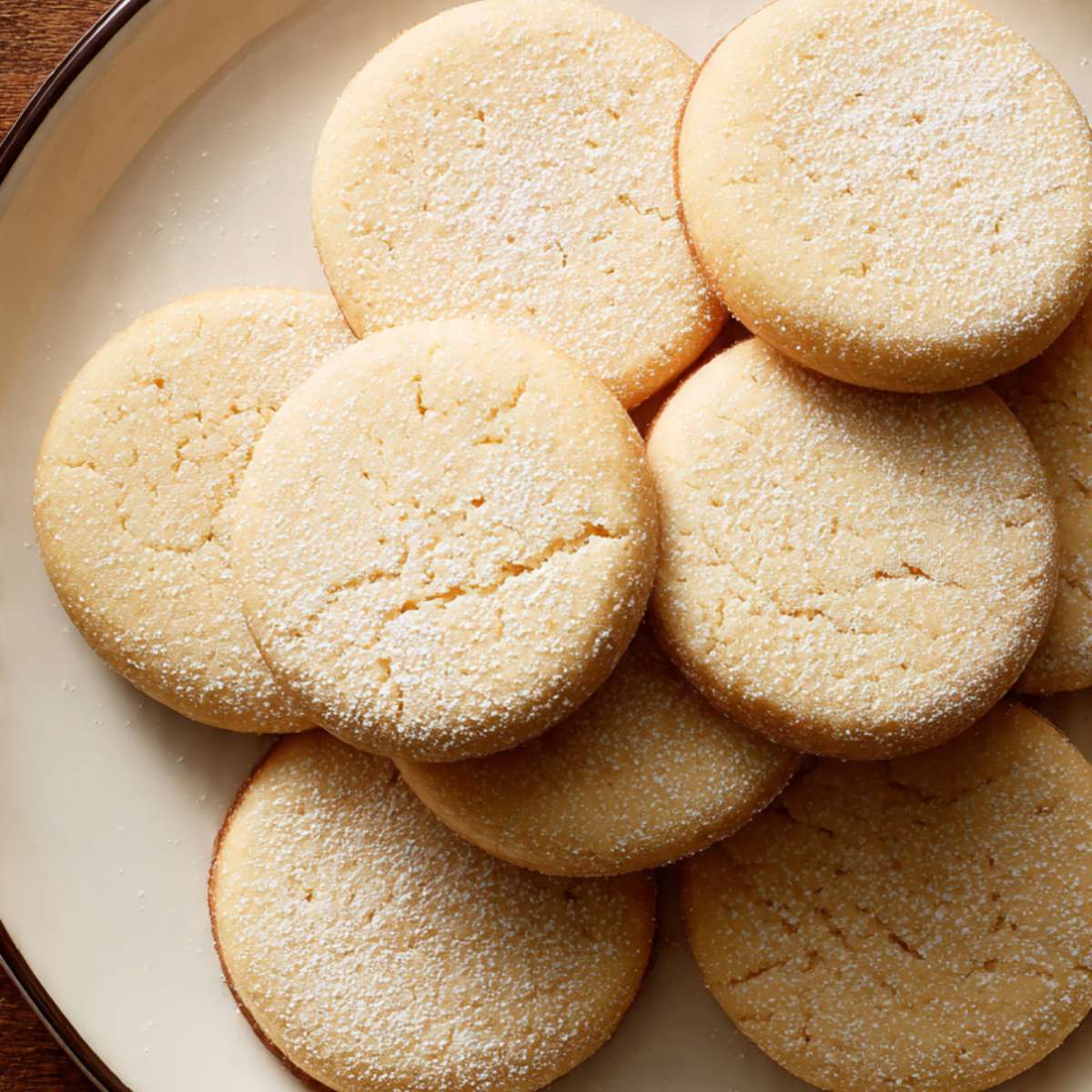
- Bake on the middle rack at 325°F (163°C) for 13 to 16 minutes, pulling the pan the moment the bottoms show a faint even golden color and the tops remain completely pale — do not wait for the tops to color.
- Place the baking sheet on a wire cooling rack and leave the cookies on the hot pan for exactly 5 minutes without moving them, then transfer to the wire rack in a single layer and cool completely for 20 to 30 minutes.
- Once cookies are completely cool, hold a fine mesh sieve 6 to 8 inches (15–20cm) above the cookies and tap gently while moving in slow circles to dust evenly with 2 tablespoons (15g) sifted powdered sugar, then allow the dusting to set for 2 to 3 minutes before stacking or serving.
Notes
- Butter: must be unsalted and softened to exactly 65–68°F (18–20°C) — press your finger into the center, it should leave a clean indent without the surface feeling greasy or shiny. Too warm = spreading. Too cold = crumbly dough.
- Flour: spoon into the measuring cup and level — never scoop directly from the bag. For guaranteed accuracy, weigh at 120g on a kitchen scale.
- Granulated sugar: use plain white granulated cane sugar only — do not substitute coconut sugar, raw sugar, or powdered sugar. Sugar type directly controls the texture of the finished cookie.
- Salt: use fine sea salt — not table salt, not kosher salt.
- Vanilla: use pure vanilla extract only — not imitation.
- Powdered sugar finish: dust only after cookies are completely cool — dusting warm cookies causes the sugar to dissolve and disappear into the surface.
- Storage: store in a hard-sided lidded container (tin preferred) with parchment between layers at room temperature for 5 to 7 days. Do not use zip-lock bags.
- Freeze baked: freeze undusted cookies individually wrapped in plastic wrap, then in a freezer bag, for up to 2 months. Thaw at room temperature 20 to 30 minutes, then dust with powdered sugar before serving.
- Freeze unbaked dough: wrap tightly in plastic wrap and foil, freeze up to 3 months. Thaw overnight in fridge, rest at room temperature 30 to 40 minutes before rolling.
- Make ahead: baked cookies keep 5 to 7 days at room temperature — bake up to 5 days ahead and dust with powdered sugar the day of serving.
- Scaling: this recipe doubles cleanly — multiply every ingredient by 2 and bake in two separate batches. Bake time stays the same.
- Altitude: above 3,500 feet (1,067 meters), chill cut cookies on the pan for 10 minutes before baking, reduce oven temperature to 310°F (154°C), and begin checking at 12 minutes.
- Allergens: contains gluten (wheat flour) and dairy (butter). This recipe is naturally egg-free.
- Tip: use a ruler to confirm ½-inch dough thickness — cookies rolled too thin will overbake before the correct visual cues appear.
- High altitude bakers: see the FAQ section for full adjustment guidelines.