
Ingredients
Equipment
Method
- Position the oven rack in the middle and heat to 350°F (175°C), then line a light-colored aluminum baking sheet with parchment paper and set aside.
- Beat the ½ cup (113g) softened unsalted butter, ½ cup (100g) plain white granulated cane sugar, and ½ cup (100g) packed light brown sugar together in a stand mixer fitted with the paddle attachment on medium speed for 3 full minutes until pale, fluffy, and no sugar granules remain.
- Add the 1 large room-temperature egg and beat on medium speed for 45 seconds until fully incorporated and the batter looks smooth and glossy, then add the 1 tsp (5ml) pure vanilla extract and beat for 10 more seconds.
- In a separate bowl, whisk together the 1 cup (120g) all-purpose flour, 1 tsp (3g) baking soda, 1 tsp (3g) ground cinnamon, and ½ tsp (3g) fine sea salt, then add the dry mixture to the butter mixture and mix on low speed just until the flour disappears — approximately 20 to 25 seconds — stopping the moment no dry streaks remain.
- Remove the bowl from the mixer and fold in the 1½ cups (135g) old-fashioned rolled oats and ¾ cup (120g) plumped, patted-dry seedless raisins by hand using a silicone spatula with slow wide strokes from the bottom of the bowl upward until evenly distributed — approximately 15 to 20 strokes.
- Using a 2-tablespoon cookie scoop, portion the dough into 40–45g rounded mounds and place them on the prepared baking sheet at least 2 inches (5cm) apart — do not flatten — for a yield of 14 cookies.
- Bake at 350°F (175°C) for 12 to 14 minutes until the edges look set and lightly golden while the centers still look slightly underdone and puffy — do not wait for the centers to look fully baked.
- Leave the cookies on the hot baking sheet for exactly 5 minutes after removing from the oven, then transfer to a wire cooling rack and cool for at least 10 more minutes before eating.
Notes
- Oats: Old-fashioned rolled oats only — quick oats and instant oats dissolve into the dough and produce a gummy texture with no chew.
- Butter: Must be softened to 65–68°F (18–20°C) — too warm causes the cookies to spread flat. Pull from fridge 60–90 minutes before baking.
- Egg: Room temperature only — pull from fridge 30 minutes before baking or warm in a bowl of warm water for 10 minutes.
- Raisins: Plump in warm water for 10 minutes, drain, and pat completely dry before folding in — dry raisins pull moisture from the dough and bake up hard.
- Brown sugar: Pack firmly into the measuring cup — unpacked brown sugar measures 30–40% less and reduces the moisture-retention effect.
- Baking soda: Check freshness before every batch — drop ½ tsp into hot water with white vinegar; it should bubble aggressively within 2 seconds.
- Cinnamon: Smell before using — should smell sharp and spicy. Replace if faint or dusty.
- Flour: Spoon into the measuring cup and level — never scoop directly from the bag. Or weigh at 120g.
- Storage: Hard-sided lidded container at room temperature up to 4 days with a slice of bread inside to maintain softness. Do not refrigerate.
- Freezer (baked): Wrap individually in plastic wrap, freeze up to 2 months, thaw at room temperature 30–45 minutes.
- Freezer (unbaked): Freeze portioned dough balls solid on a sheet, transfer to a freezer bag, store up to 3 months, bake from frozen adding 2–3 minutes to the bake time.
- Scaling: Recipe doubles reliably — use gram weights when doubling. Use 1¾ tsp (5.5g) baking soda for a double batch, not 2 tsp — baking soda does not scale linearly.
- Altitude: Above 3,500ft (1,070m) — reduce baking soda to ¾ tsp (2.5g), add 2 tbsp (15g) flour, reduce oven to 335°F (168°C).
- Allergens: Contains gluten, dairy, and eggs.
- Make-ahead: Dough can be refrigerated as portioned balls up to 48 hours — add 1 minute to bake time when starting from cold.
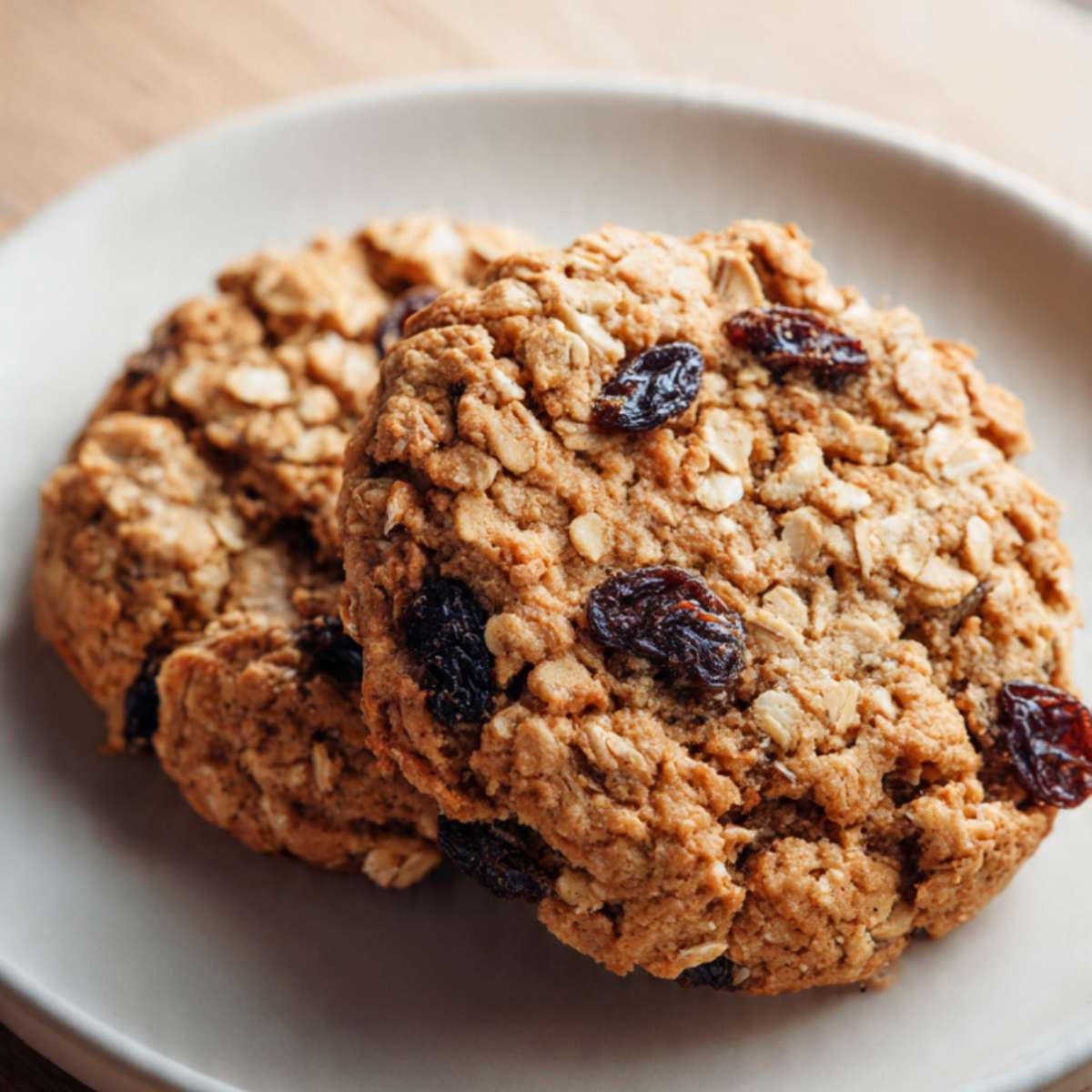
- Pro-Tip: Press 4–5 extra plumped, patted-dry raisins onto the top of each dough ball before baking — this is what produces the prominent visible raisins on every finished cookie shown in the photos.