
Ingredients
Equipment
Method
- Position the oven rack in the middle position and preheat to 350°F (175°C). Set a 9x13 inch (23x33cm) glass baking dish on the counter — do not grease it.
- Peel, core, and slice all 3 lbs (1,360g) of Granny Smith apples into ¾-inch (2cm) wedges, transferring them directly into a large mixing bowl as you work. Add the ¼ cup (55g) light brown sugar, 1½ tsp ground cinnamon, ¼ tsp ground nutmeg, 1 tbsp (15ml) fresh lemon juice, 1 tsp pure vanilla extract, and ¼ tsp fine sea salt all at once and toss until every apple wedge is evenly coated and a thin syrup forms at the bottom of the bowl — about 60 seconds of active tossing.
- Pour the entire apple mixture including all accumulated syrup into the prepared glass baking dish and spread into an even layer from corner to corner using a rubber spatula — the layer should be approximately 1 to 1¼ inches (2.5–3cm) deep with no large gaps. Do not press or compact the apples.
- Open the 15.25 oz (432g) box of yellow cake mix and pour the entire contents directly and evenly over the apple layer without mixing anything first. Spread into an even layer approximately ½ inch (1.3cm) deep using the spatula or the back of a large spoon, covering the apple surface completely from edge to edge and paying particular attention to the corners.
- Melt the ½ cup (113g) unsalted butter completely — stovetop over low heat or microwave in three 15-second increments — and let it cool for 2 minutes. Pour slowly and evenly over the dry cake mix surface in overlapping passes covering the full pan — some dry white patches will remain and this is correct. Do not stir.
- Bake on the middle rack at 350°F (175°C) for 45 to 50 minutes, beginning to check at 43 minutes. The cake is done when the edges are deep cinnamon-brown and pulling from the glass walls, the surface is a landscape of golden-brown pebbled clumps, and fruit juices are visibly bubbling through the surface craters across the entire pan — not just at the edges. Do not open the oven before the 43-minute mark.
- Remove from the oven and place on a wire cooling rack. For warm scoops, rest for 10 minutes and serve directly from the pan with a large spoon. For clean cut squares, rest for 20 minutes at room temperature then refrigerate for 15 minutes before cutting into 12 equal squares with a sharp knife wiped clean between each cut.
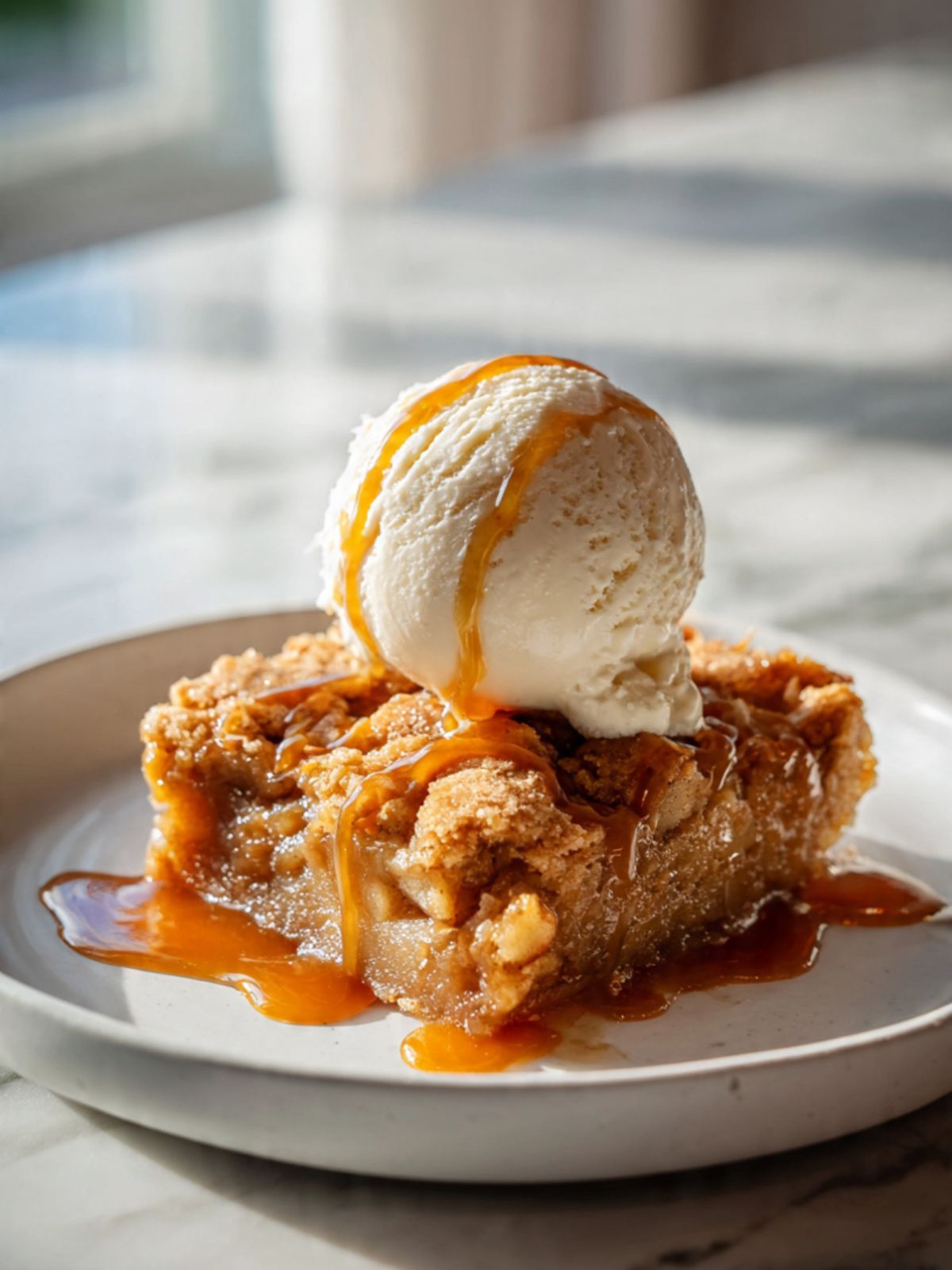
- Place one square or one generous scoop into a wide shallow bowl or onto a white ceramic plate. Add one large scoop of vanilla ice cream directly on top, drizzle approximately 2 tablespoons of warmed salted caramel sauce over the ice cream and cake, and serve immediately.
Notes
Apple variety matters: Granny Smith and Honeycrisp hold their shape under heat. Softer varieties turn to mush and produce a watery base.
Do not grease the pan — the butter from the topping provides sufficient fat at the base during baking.
Dry white patches on the topping after pouring the butter are correct — they will hydrate from the apple juices below during baking.
Do not stir any layer after it is added to the pan — layer separation is what produces the crumble topping.
Glass baking dish only — dark metal pans cause edge scorching before the center is done. If using metal, reduce oven temp to 325°F (160°C).
Make-ahead: bake completely, cool, cover with foil, refrigerate up to 4 days. Reheat whole pan at 325°F (160°C) for 15–18 minutes or individual squares for 8 minutes.
Freeze baked portions individually wrapped in double plastic wrap, then in a freezer bag, up to 2 months. Thaw overnight in refrigerator. Reheat at 325°F (160°C) for 18–22 minutes from frozen.
Scaling: to double, use two separate 9x13 pans. Multiply all ingredients by 2 but start with 1.5x the spices and adjust to taste. Bake time remains the same.
High altitude above 3,500 ft (1,067m): add 2 tbsp water to apple toss, increase oven temp to 365°F (185°C), begin checking at 40 minutes.
Allergens: contains gluten and dairy. For gluten-free, use King Arthur Gluten-Free Yellow Cake Mix. For dairy-free, replace butter with ½ cup (113g) refined coconut oil — see FAQ for full substitution details.